Tell us about the job
Takes about a minute. No obligation.
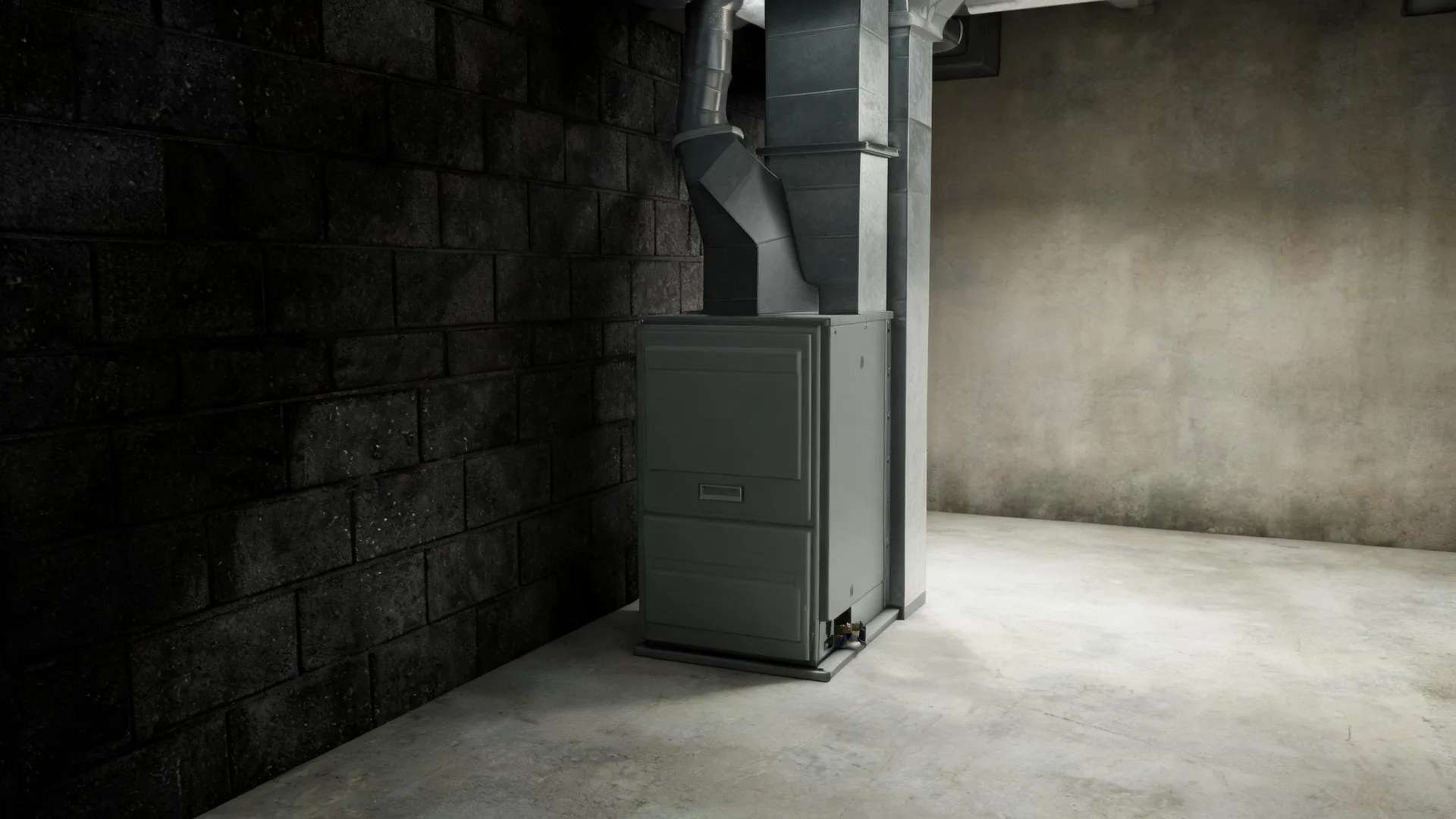
A contractor quoting a furnace installation in Clay County is not solving a storm problem. 66 severe weather events were recorded in Clay County, West Virginia between 2015 and 2024. At that rate, severe weather is an occasional event in this area rather than a steady operating condition, which means the decisions that determine whether a new system performs well are about correct sizing for the home and the quality of the install itself. Ductwork, heat load calculation, and equipment selection are what a contractor has to get right here. The weather does not explain much.
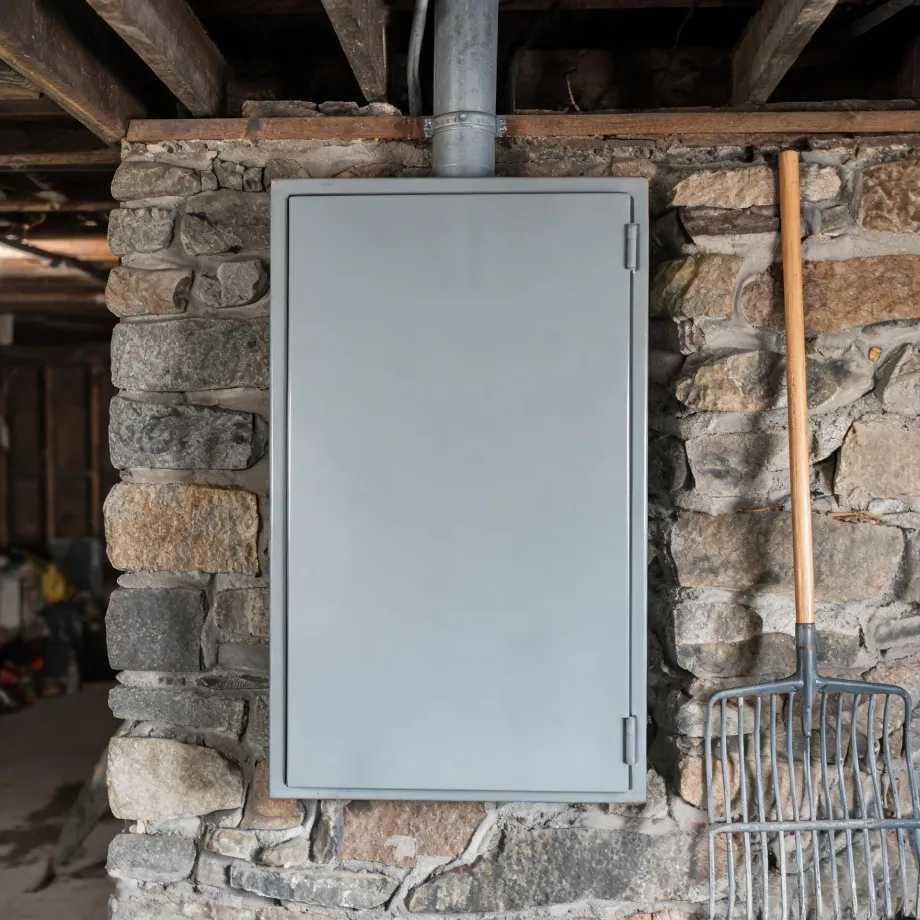
Ductwork sized and laid for older heating systems does not automatically carry a modern furnace's airflow, and in Clay County's housing stock that gap is where an installation job gets complicated or stays simple. Half the homes in Clay County, West Virginia were built in 1985 or earlier (2020-2024 ACS 5-year). A contractor replacing a furnace here measures what the existing duct network will actually move before anything else, because if the distribution cannot handle the new unit's output, the duct system gets modified alongside the equipment. The electrical service gets the same look, since panel capacity that was adequate for older equipment may need upgrading to meet what a new furnace draws.
What Gets Installed With a New Furnace
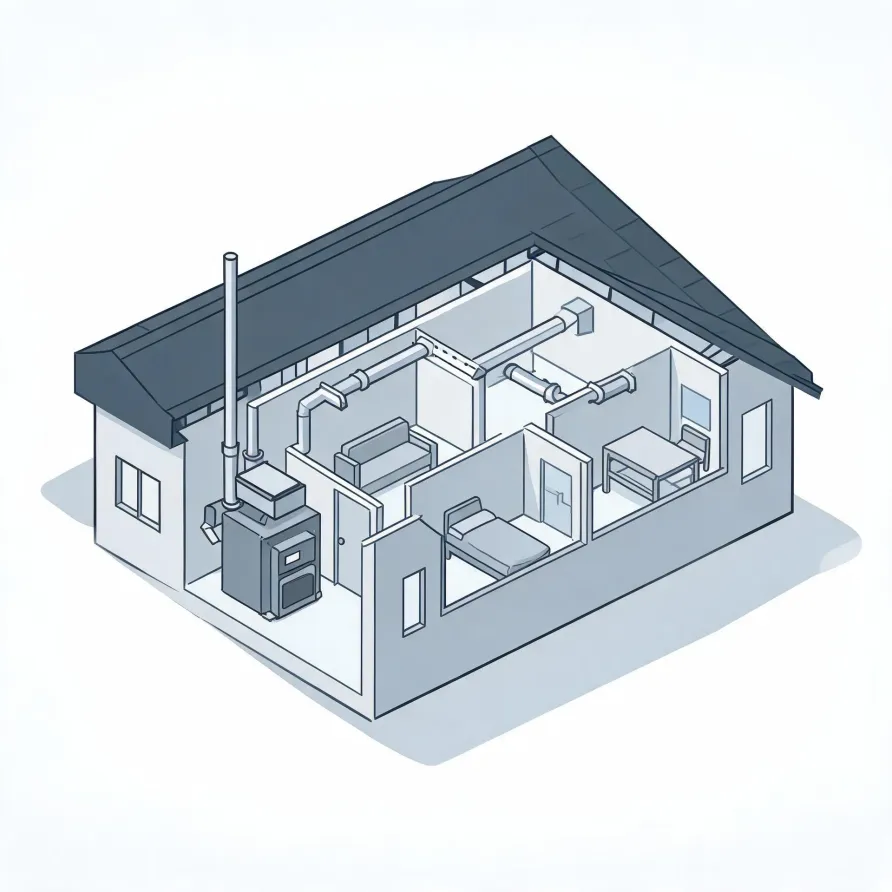
The furnace itself sits in a mechanical room, basement, or utility closet and is the heart of the installation. A contractor fits the heat exchanger and burner assembly inside the cabinet, connects the flue pipe that carries combustion gases out of the house, and sets the blower that pushes conditioned air into the supply side of the system.
The thermostat mounts on an interior wall where it reads the air temperature and signals the furnace to fire or shut off. Alongside the furnace, a contractor installs or ties into the gas line with a shutoff valve, and fits the air filter housing at the return-air inlet where incoming air passes through before reaching the heat exchanger.
The drawing shows a typical layout, and a licensed contractor determines exactly what applies to your home's configuration.
Find a contractor in Clay CountyClay County by the Numbers
66 severe weather events were recorded in Clay County, West Virginia between 2015 and 2024.
NOAA National Centers for Environmental Information, Storm Events Database, bulk CSV export, events 2015-01-01 through 2024-12-31.Half the homes in Clay County, West Virginia were built in 1985 or earlier (2020-2024 ACS 5-year).
U.S. Census Bureau, 2020-2024 American Community Survey 5-Year EstimatesClay County, West Virginia holds 3,961 housing units (2020-2024 ACS 5-year).
U.S. Census Bureau, 2020-2024 American Community Survey 5-Year EstimatesOwners occupy 76.0% of the occupied homes in Clay County, West Virginia (2020-2024 ACS 5-year).
U.S. Census Bureau, 2020-2024 American Community Survey 5-Year EstimatesCodes & Standards Governing Furnace Installation in Clay County, West Virginia5 sourced rules and standards
What the installation work looks like
Non-weatherized gas furnaces manufactured on or after November 19, 2015 must reach 80.0 percent AFUE.
Non-weatherized oil-fired furnaces manufactured on or after November 19, 2015 must reach 83.0 percent AFUE.
Mobile home gas furnaces manufactured on or after November 19, 2015 must reach 80.0 percent AFUE.
Non-weatherized gas furnaces manufactured on or after December 18, 2028 must reach 95.0 percent AFUE, up from the 80.0 percent minimum that applies to units manufactured before that date.
Licensing Rules for HVAC Work in Clay County, West Virginia
West Virginia requires a licence from the Commissioner of Labor to perform, or offer to perform, work on a heating, ventilating and cooling system.
Severe Weather Events in Clay County
Weather puts direct pressure on heating equipment: harder winters and volatile seasonal swings push furnaces to run longer and work harder than specs written for milder climates assume. How much strain a furnace carries over its life is a local question, and the record below reflects the conditions contractors here are actually sizing and installing for.
66 severe weather events, 2015–2024. Source: NOAA National Centers for Environmental Information, Storm Events Database.