Tell us about the job
Takes about a minute. No obligation.
Sizing a furnace for a house in Hancock County starts with the building itself: its insulation, its layout, its infiltration. 64 severe weather events were recorded in Hancock County, West Virginia between 2015 and 2024. At that rate, severe weather is a periodic reality, not a standing pressure that bends every installation decision. A contractor quoting a new furnace here is working out what this particular structure needs to stay warm through a West Virginia winter. Duct layout, equipment output, and commissioning quality are what determine whether that furnace performs year after year.
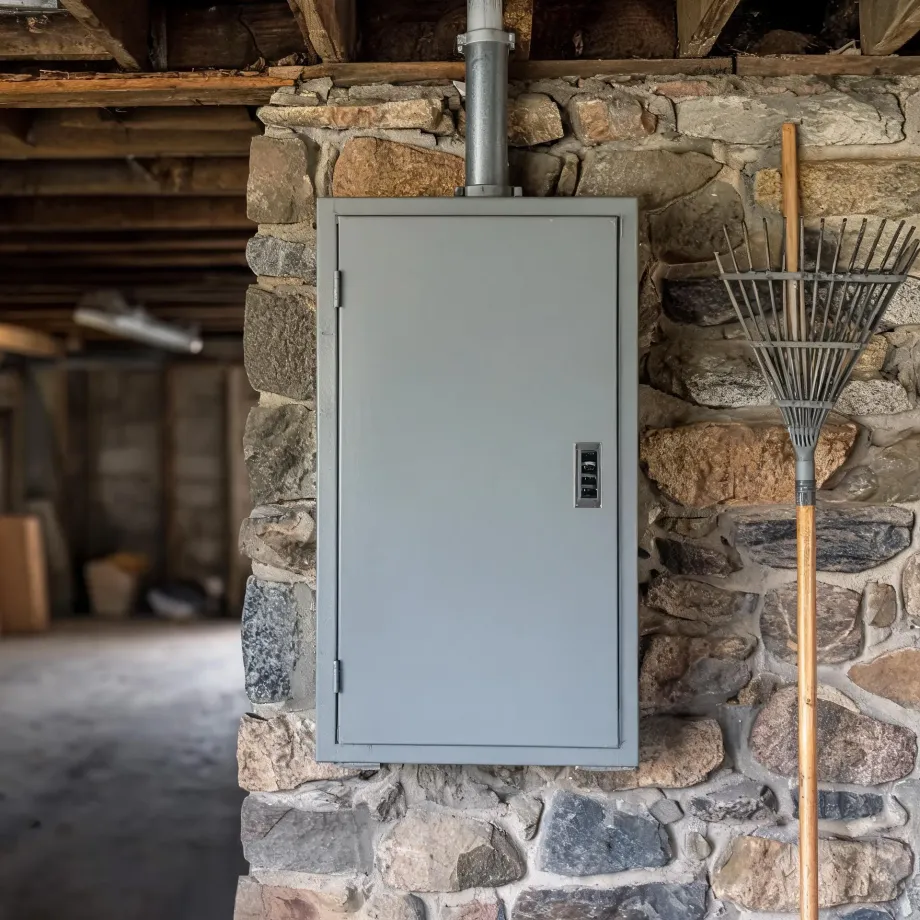
Ductwork laid down for an older heating system was sized and routed for that system, and a new furnace draws and distributes air differently. Half the homes in Hancock County, West Virginia were built in 1959 or earlier (2020-2024 ACS 5-year). A contractor installing a furnace in a house from that era has to assess what the existing duct network will actually carry before any equipment decision is final. If the runs are too narrow or the returns too few, the new unit will not perform to spec regardless of what is on the nameplate. The electrical side gets checked for the same reason. What the house already contains decides the scope of the job.
What Gets Installed With a New Furnace
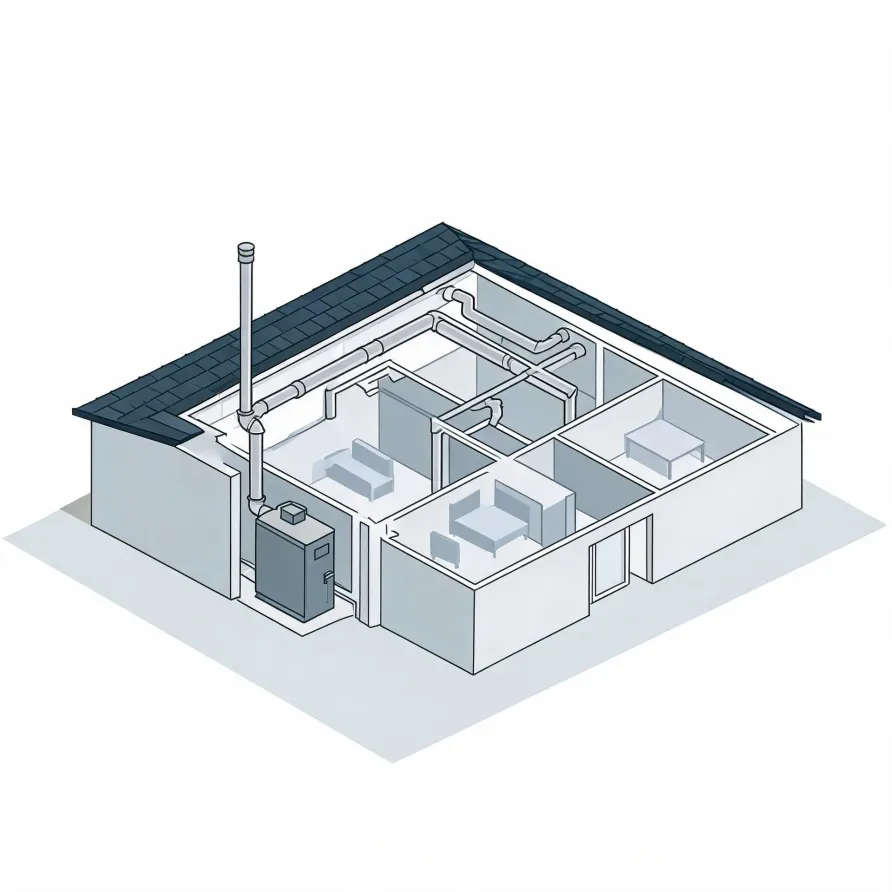
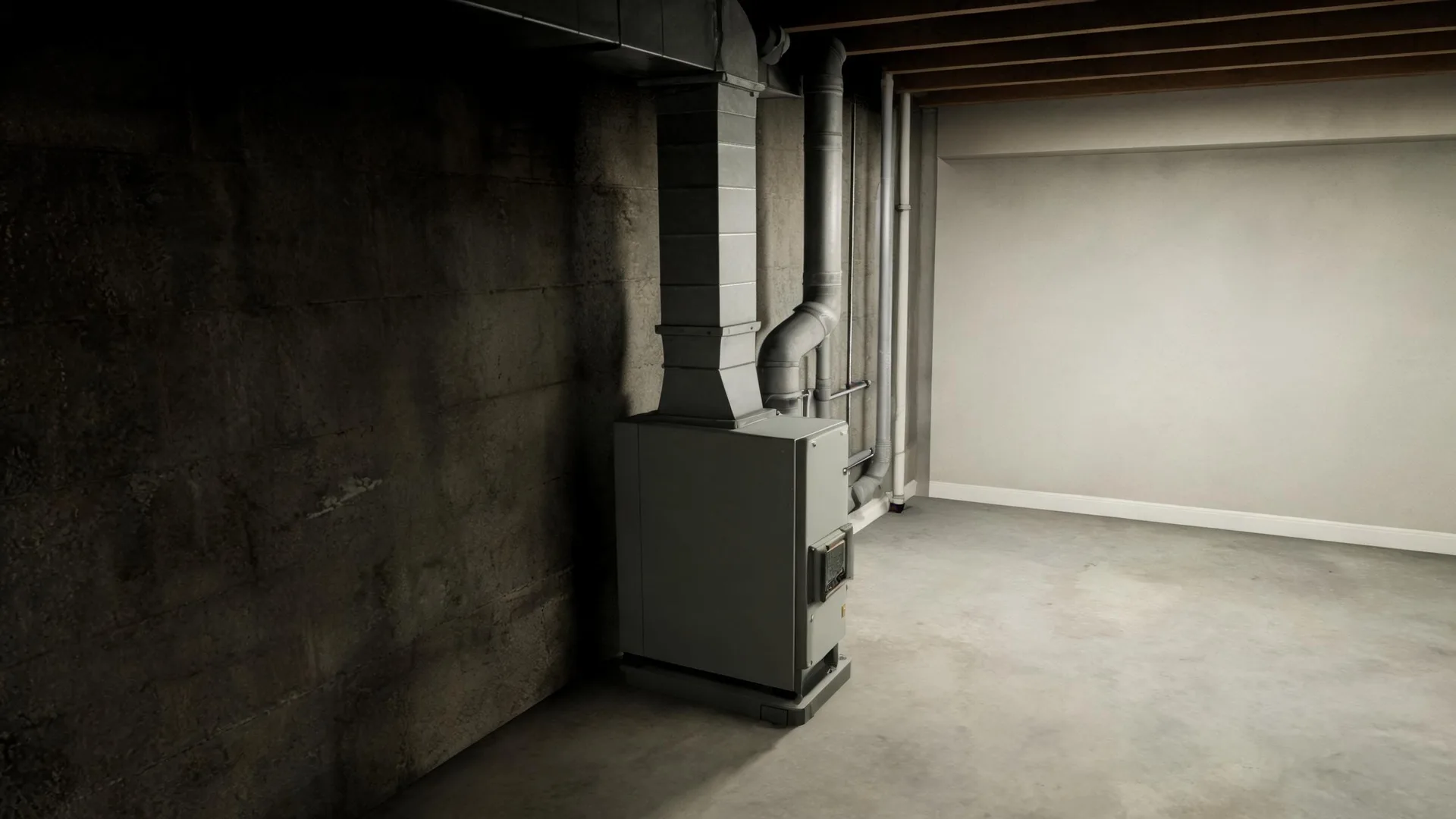
The furnace itself sits in a mechanical room, basement, or utility closet and is the heart of the installation. A contractor sets the unit in place, connects it to the gas supply, and ties it into the existing duct opening. The heat exchanger and burner assembly live inside that cabinet.
The flue pipe runs from the furnace up through the house or out a sidewall, carrying combustion gases outside. Alongside it, the contractor installs or replaces the air handler components and connects the thermostat wiring that tells the furnace when to fire.
The drawing shows a typical layout, and a licensed contractor determines exactly what applies to your home's configuration.
Find a contractor in Hancock CountyHancock County by the Numbers
64 severe weather events were recorded in Hancock County, West Virginia between 2015 and 2024.
NOAA National Centers for Environmental Information, Storm Events Database, bulk CSV export, events 2015-01-01 through 2024-12-31.Half the homes in Hancock County, West Virginia were built in 1959 or earlier (2020-2024 ACS 5-year).
U.S. Census Bureau, 2020-2024 American Community Survey 5-Year EstimatesHancock County, West Virginia holds 14,194 housing units (2020-2024 ACS 5-year).
U.S. Census Bureau, 2020-2024 American Community Survey 5-Year EstimatesOwners occupy 74.5% of the occupied homes in Hancock County, West Virginia (2020-2024 ACS 5-year).
U.S. Census Bureau, 2020-2024 American Community Survey 5-Year EstimatesCodes & Standards Governing Furnace Installation in Hancock County, West Virginia5 sourced rules & standards
What the Installation Actually Looks Like
Non-weatherized gas furnaces manufactured on or after November 19, 2015 must reach 80.0 percent AFUE.
Non-weatherized oil-fired furnaces manufactured on or after November 19, 2015 must reach 83.0 percent AFUE.
Mobile home gas furnaces manufactured on or after November 19, 2015 must reach 80.0 percent AFUE.
Non-weatherized gas furnaces manufactured on or after December 18, 2028 must reach 95.0 percent AFUE, up from the 80.0 percent minimum that applies to units manufactured before that date.
Licensing Rules for Contractors in Hancock County, West Virginia
West Virginia requires a licence from the Commissioner of Labor to perform, or offer to perform, work on a heating, ventilating and cooling system.
Severe Weather Events in Hancock County
Hancock County's weather record shapes how hard a furnace has to work and how long it stays reliable doing it. That load profile is local, which is why the right equipment choice and installation quality are decisions that belong in a county-specific conversation.
64 severe weather events, 2015–2024. Source: NOAA National Centers for Environmental Information, Storm Events Database.