Tell us about the job
Takes about a minute. No obligation.
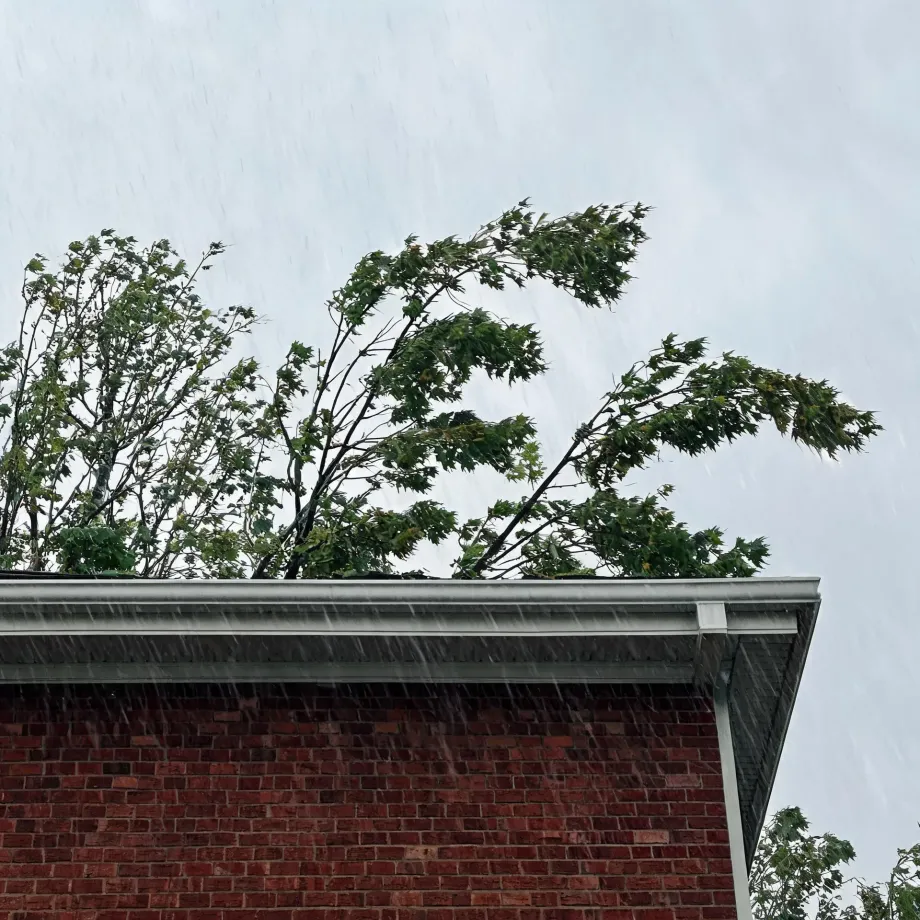
A furnace contractor working a repair in Wood County has to sort out whether the failure is weather-related before assuming it is. 135 severe weather events were recorded in Wood County, West Virginia between 2015 and 2024. At that rate, severe weather is a real part of operating life here, but it falls in a range where age and original installation quality account for most of what goes wrong. Heat exchangers crack from years of cycling, not from any single event. A contractor will check stress points that accumulate over time first, and the weather record rarely changes that diagnosis.
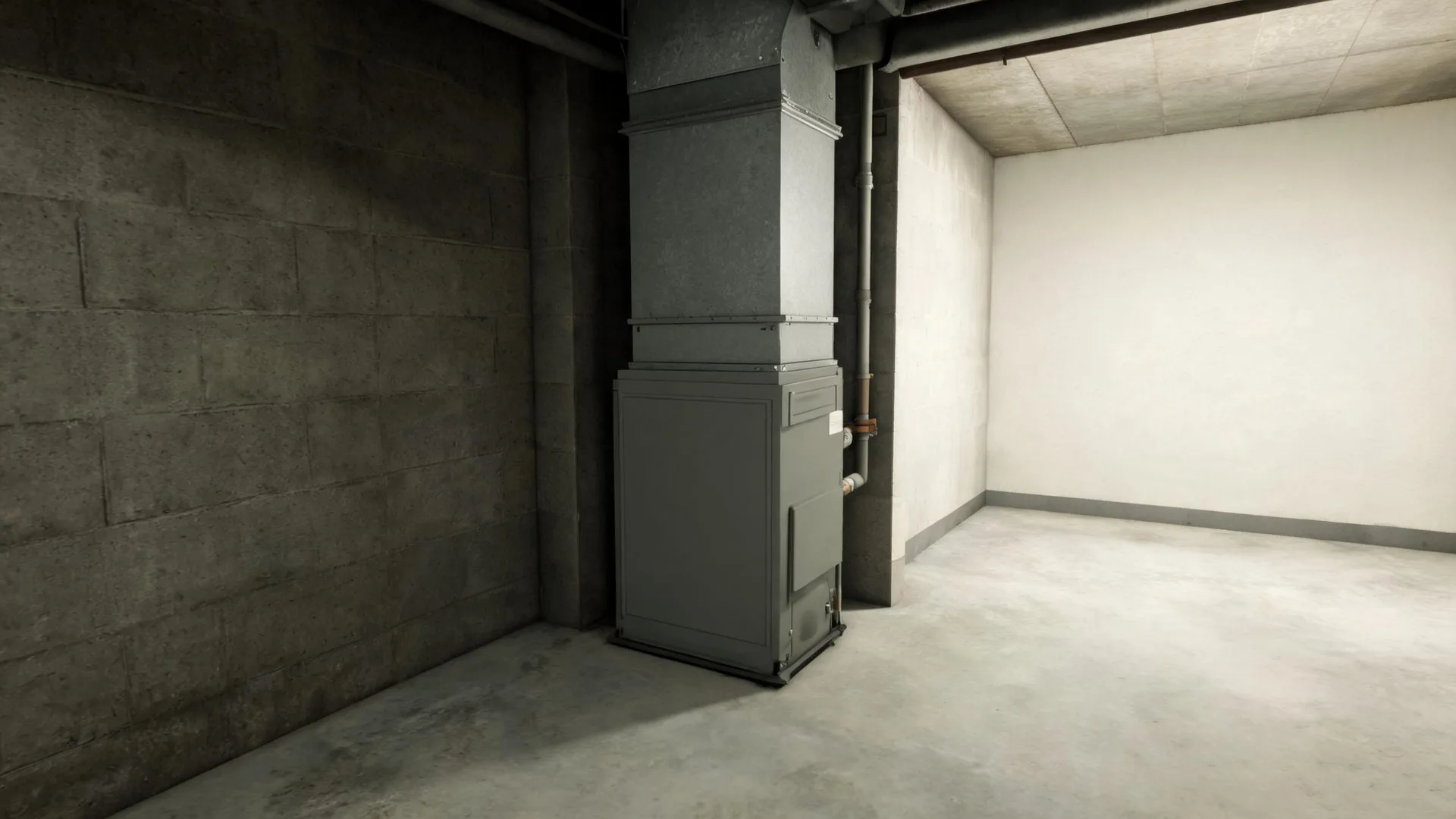
Half the homes in Wood County, West Virginia were built in 1970 or earlier (2020-2024 ACS 5-year). A furnace that has been running in a house built that long ago has cycled through winters that the original construction was never designed to manage efficiently. When a contractor opens the unit, what they find reflects that history: heat exchangers stressed by years of uneven airflow, burners fouled by ductwork that was retrofitted rather than designed for the system now sitting in the plenum. The parts a furnace of this vintage takes may still be available, but a contractor has to verify that before quoting a repair, not after pulling the old component.
The Parts of a Furnace a Contractor Checks First
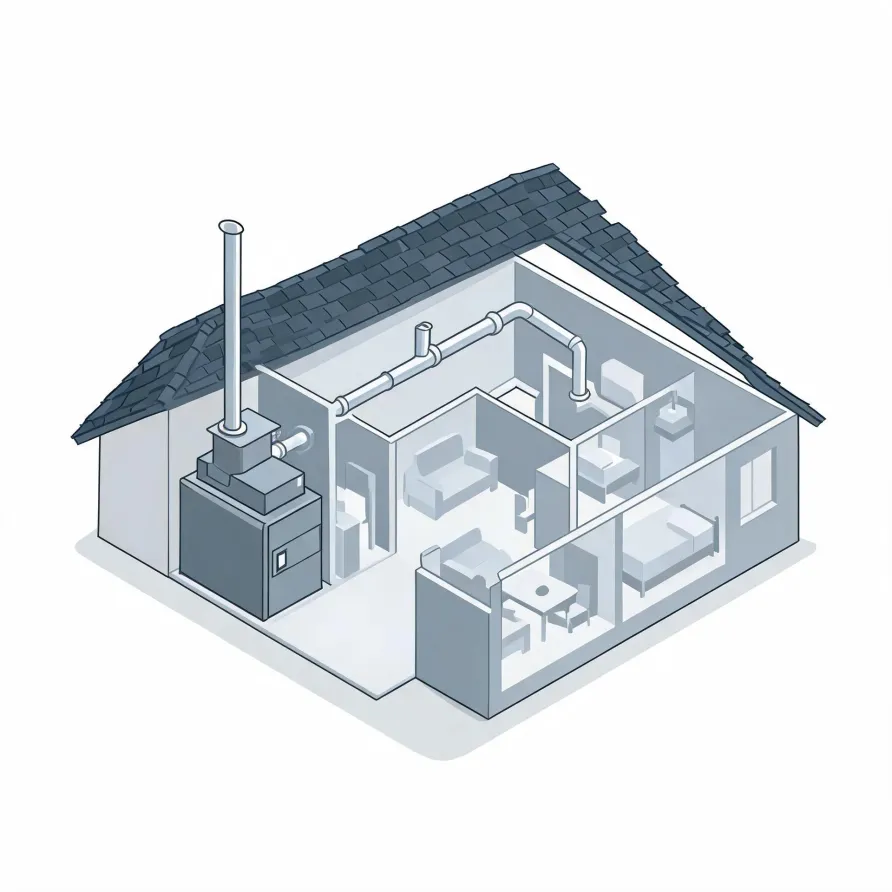
The heat exchanger sits at the core of the furnace cabinet and is where the burner's heat passes into the air your home circulates. Cracks or stress in that metal are a common source of poor heating and carbon monoxide risk. The burner assembly feeds it, and a contractor will look at both early.
The blower motor and its fan wheel sit below the heat exchanger and push conditioned air out through the supply side of the system. The flue pipe runs from the top or back of the cabinet to an exterior vent, carrying combustion gases out. The control board ties every component together, and when something misfires, it is often where a contractor traces the fault.
The drawing shows a typical furnace layout, and a licensed contractor determines which components apply to your specific setup.
Find a contractor in Wood CountyWood County, WV, by the numbers
135 severe weather events were recorded in Wood County, West Virginia between 2015 and 2024.
NOAA National Centers for Environmental Information, Storm Events Database, bulk CSV export, events 2015-01-01 through 2024-12-31.Half the homes in Wood County, West Virginia were built in 1970 or earlier (2020-2024 ACS 5-year).
U.S. Census Bureau, 2020-2024 American Community Survey 5-Year EstimatesWood County, West Virginia holds 40,283 housing units (2020-2024 ACS 5-year).
U.S. Census Bureau, 2020-2024 American Community Survey 5-Year EstimatesOwners occupy 75.1% of the occupied homes in Wood County, West Virginia (2020-2024 ACS 5-year).
U.S. Census Bureau, 2020-2024 American Community Survey 5-Year EstimatesFurnace Repair Rules & Codes for Wood County, West Virginia5 sourced standards and regulations
What HVAC Repair Looks Like in Wood County
Non-weatherized gas furnaces manufactured on or after November 19, 2015 must reach 80.0 percent AFUE.
Non-weatherized oil-fired furnaces manufactured on or after November 19, 2015 must reach 83.0 percent AFUE.
Mobile home gas furnaces manufactured on or after November 19, 2015 must reach 80.0 percent AFUE.
Non-weatherized gas furnaces manufactured on or after December 18, 2028 must reach 95.0 percent AFUE, up from the 80.0 percent minimum that applies to units manufactured before that date.
Licensing and Legal Requirements in Wood County, West Virginia
West Virginia requires a licence from the Commissioner of Labor to perform, or offer to perform, work on a heating, ventilating and cooling system.
Severe Weather Events in Wood County
Weather swings put real load on furnace systems, and Wood County's climate is its own. A furnace that runs hard through rough seasons wears differently than one that sits in mild air, which makes local weather history a useful backdrop for understanding why repair needs look the way they do here.
135 severe weather events, 2015–2024. Source: NOAA National Centers for Environmental Information, Storm Events Database.