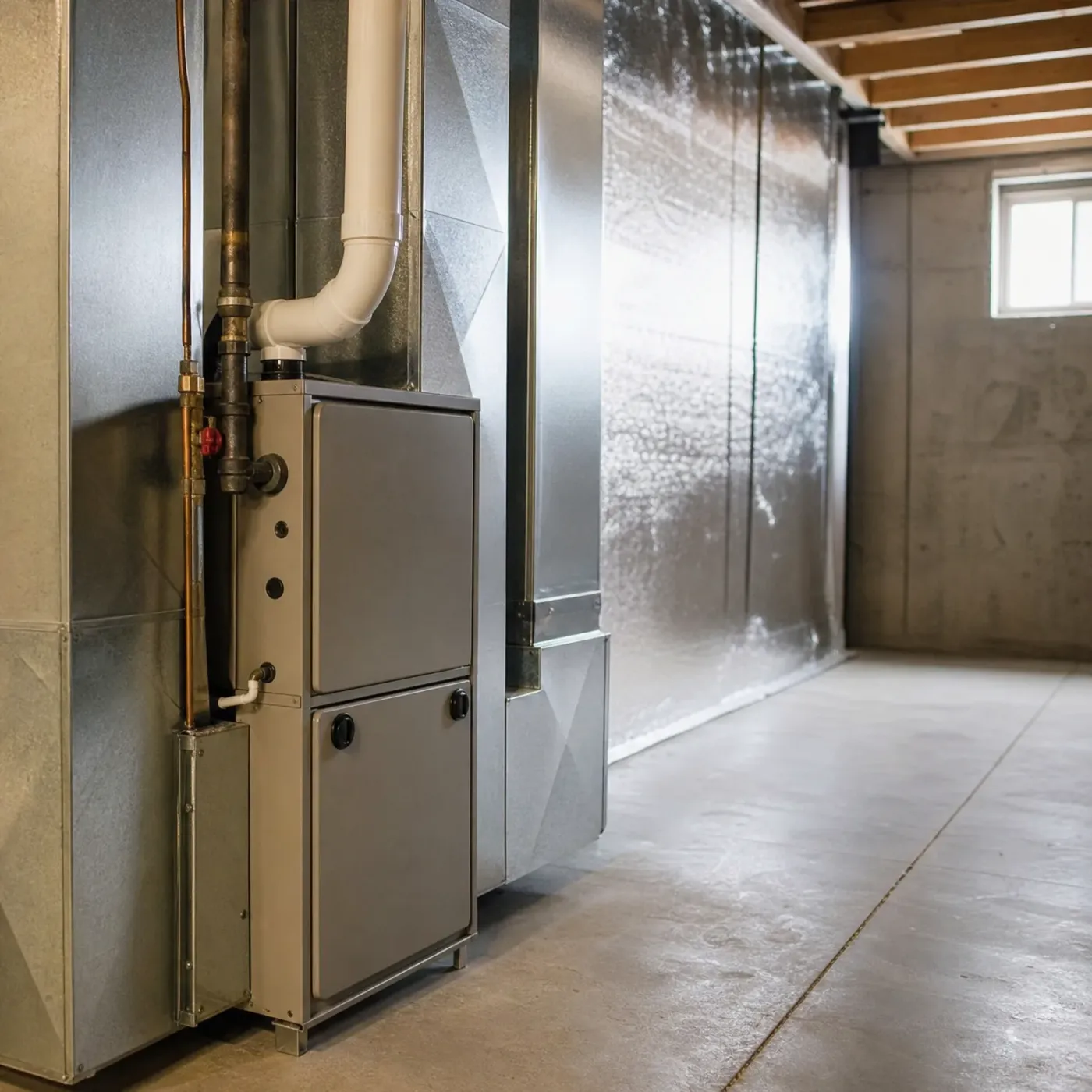
A clean light-off
When the burner lights on the first try, the flame catches smoothly and the furnace runs quiet from startup. No delay, no pocket of gas waiting to ignite. This is what a clean igniter and burner sound like.
A bang when your furnace starts usually means gas is building up in the burner chamber before it lights, then igniting all at once instead of catching smoothly. A dirty burner or a failing igniter causes the delay. A bang when it shuts off is usually the ductwork popping as the metal cools and contracts, which is common and often harmless on its own. If the noise is loud, happens every cycle, or has gotten worse, have it looked at. Most furnaces here run on electricity, and electric furnaces have their own heating elements and blower that can cause banging too, from a loose panel to a failing part inside. Either way, a furnace that bangs on startup is working harder than it should, and that burner issue won't fix itself.
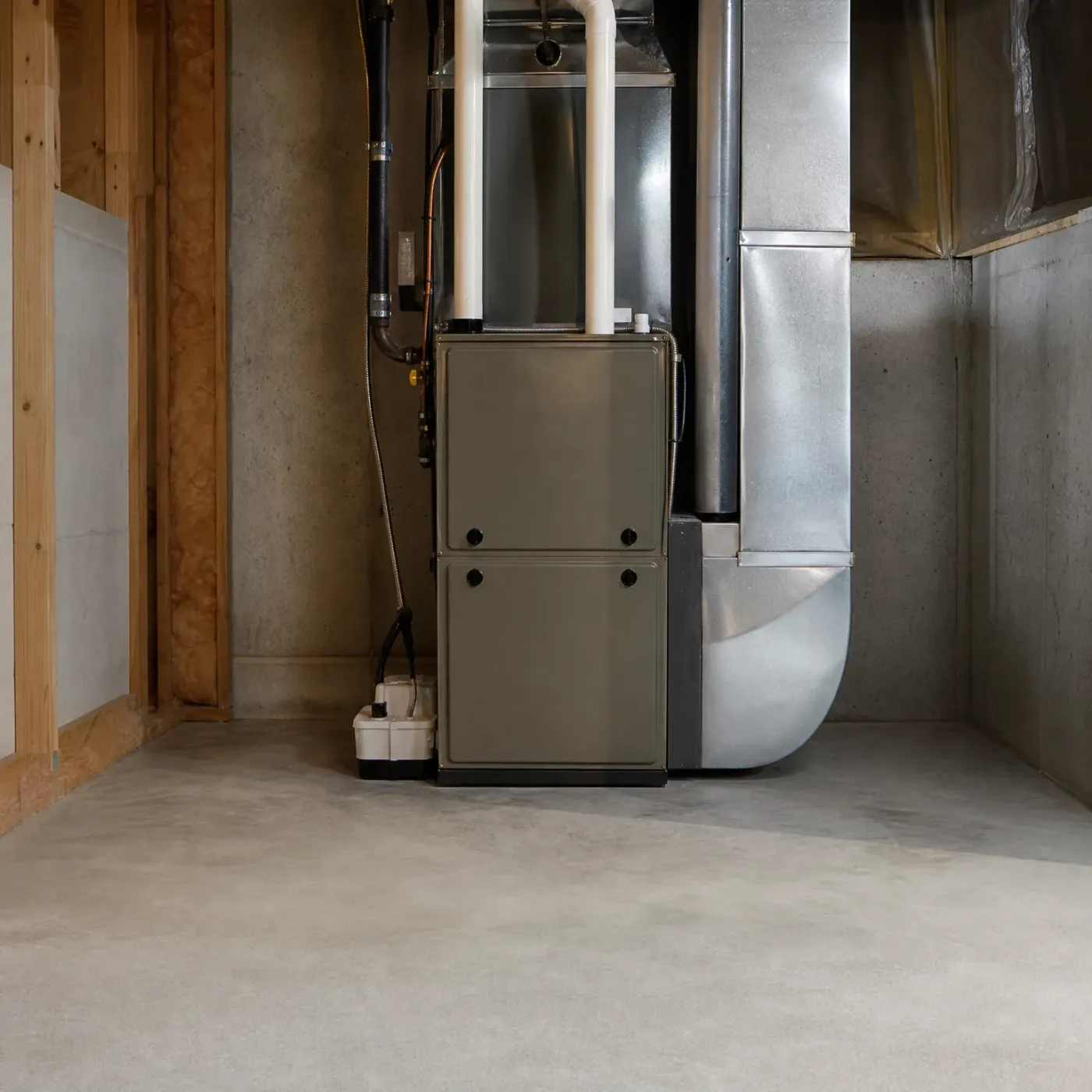
When the burner lights on the first try, the flame catches smoothly and the furnace runs quiet from startup. No delay, no pocket of gas waiting to ignite. This is what a clean igniter and burner sound like.
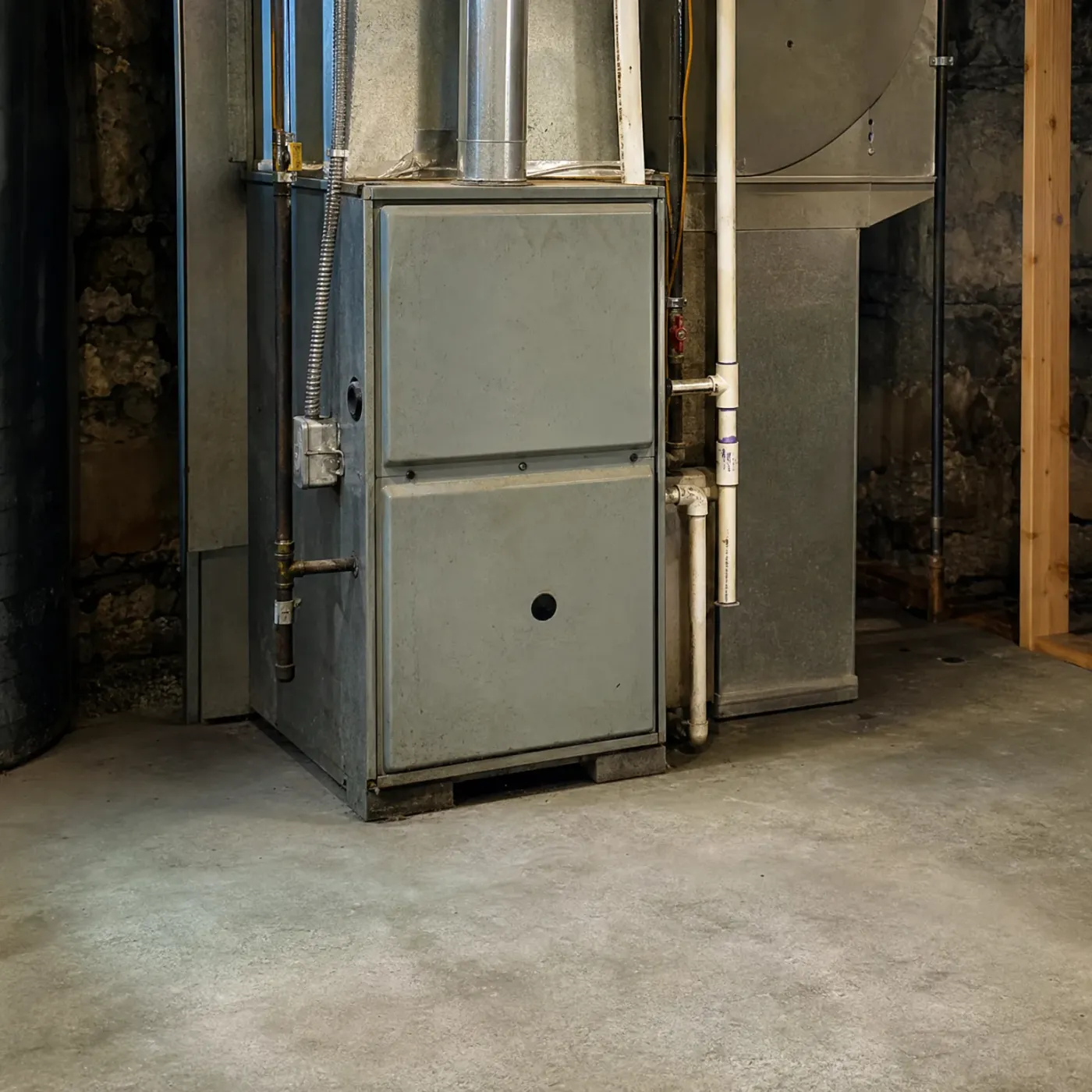
Here the gas has time to pool before it catches, so it ignites all at once with a bang. Older furnaces like this one, especially with a few years on the igniter or a burner that hasn't been cleaned, are the ones that start doing this.


Most homes in West Virginia heat with electricity, so there's no burner chamber to build up gas before ignition. What you're hearing is almost always metal. Ductwork is sheet metal, and sheet metal moves when its temperature changes. Hot air pushes into a cold duct and the metal expands outward, then it pulls back as the blower shuts off and the air cools. That movement is where the pop or bang comes from, and it can happen anywhere along the line, not just at the furnace. A strap that's worked loose from a joist, or a panel that's not seated tight, gives that same expansion more room to move, and more room means a louder sound. If your furnace runs on gas instead, the heat exchanger can make a similar sound as it heats, and a sharper or more frequent bang there is worth having checked. Pay attention to where the sound seems to start. A bang right at the unit points somewhere different than one coming from down the duct line, and that location is usually the first thing a technician asks about.




A banging furnace in a West Virginia winter isn't something to leave alone until it gets worse. If yours runs on electricity, the loose duct strap or panel that's letting the metal pop can usually be found and fixed before it works itself looser. If you've got a gas furnace, a delayed bang points to a burner or igniter that needs attention before it causes a harder start every time. Either way, it takes someone who knows what's behind that sound to say for sure, and a local contractor who works on furnaces all winter here has heard this exact noise plenty of times. Ask for a repair and your request goes to one licensed contractor in your area, not several, so you're dealing with one call back, from someone who already knows what tends to fail in furnaces around here and what to check first.
A duct strap that's already a little loose doesn't tighten itself. Every time the furnace runs, the metal flexes against that same loose point, and the gap it's moving through gets a little bigger. That's why a bang that started out faint in November can be loud by January. The furnace isn't working any harder. The duct is just free to move more than it was. Checking the straps and the seams where ducts meet the plenum, especially near the furnace itself, usually finds the spot before the movement wears a hole in the metal or pulls a joint apart.
The popping is loudest near the furnace because that's where the temperature swing is biggest. Air coming off the heat exchanger is hotter than air ten feet down the duct, so the metal right at the furnace connection expands and contracts more on every cycle. A long run of duct with no strap in the middle can also drum like this, flexing up and down as the blower starts and stops. Either way, the fix is mechanical, not electrical, and it's usually a short job once someone's traced the sound to the exact spot.
Nights here average 25°F through December, January and February, so your furnace is running long, frequent cycles most of the winter. That's a lot of heating and cooling of the same ductwork, night after night. Any loose strap or panel gets more chances to work itself looser before spring.
NOAA nClimDiv 1991-2020 county normals weighted by homes
A banging furnace has a cause, and where in the cycle you hear it tells you which one. Startup points to the burner and igniter. Shutdown points to ductwork settling as it cools. If your home heats with electricity, there's no burner chamber to build up gas in the first place, so the noise is almost certainly metal, not flame. That matters because it changes what gets checked first and what gets fixed.
None of this gets better on its own. Three months of nights in the 20s means your furnace is cycling long and often, and every cycle gives a loose strap or a loose panel one more chance to move a little further than it did the last time. What starts as a noise you notice is also a connection working itself loose, and that doesn't reverse itself over a winter.
Having it looked at now is a smaller job than having it looked at after the strap lets go or the igniter fails outright. A contractor who services furnaces through a West Virginia winter sees this noise on this kind of system often enough to know where to check first, electric or gas. That's who gets matched to your request: one licensed contractor working in your area, familiar with what tends to go on these systems, not a handful of companies competing for the callback. You get one call from someone who already has a reasonable idea what they're coming to look at.