



Why your furnace smells like burning in West Virginia

Step 1 of 3: Equipment

A burning smell from your furnace usually means dust burning off the heat exchanger, and that's normal for the first few minutes after you turn the heat on for the season. If it keeps smelling that way, or smells more like plastic or something electrical, that's different. A dirty filter can make the system run hotter than it should, and a cracked heat exchanger or a failing blower motor will give off a burning smell that doesn't go away. Since most homes in West Virginia heat with electricity, a burning smell can also point to a motor or a wiring connection overheating inside the unit rather than a gas problem. Either way, running the furnace while it smells like this isn't something to wait out. Shut it off and have someone look at it before you turn it back on.

A man with grey hair and stubble in a dark sweater sits on a grey sofa indoors, looking off to the side, with a potted plant and a sunlit window behind him.
A man with gray hair, a beard and glasses, wearing a dark green sweater, sits on a gray sofa in a sunlit living room with a potted plant, table lamp and wooden sideboard behind him.
A middle-aged man with graying hair and a short beard sits on a blue sofa in a living room, looking toward a window, with a bookshelf, lamp and framed picture in the background.
A man with graying curly hair and a dark green sweater sits on a gray sofa in a sunlit living room, looking off to the side, with a framed picture, shelving, an armchair and a window with sheer curtains behind him.

Why does my furnace still smell like burning after a few minutes?

A quick dust burn-off smell is one thing, but if yours is still there after the furnace has been running a while, you want to know if that's something to shut off and get looked at, or just a longer version of normal. Since most homes in West Virginia heat with electricity, it also helps to know what's actually producing that smell inside the unit.

That points to something burning that isn't dust, not more of the same

A dust burn-off smell fades once the heating elements and coil get hot enough to finish it off, usually within several minutes. If the smell is still there after that, something else is heating up that shouldn't be. In an electric furnace that's often a heating element going bad, insulation on a wire rubbing somewhere it shouldn't, or dust and debris packed against the blower motor housing. None of those clear up on their own, and running the furnace with one of them going on can damage the element or the motor further. A licensed contractor can open the cabinet, find which part is actually producing the smell, and replace it before it turns into a bigger repair.

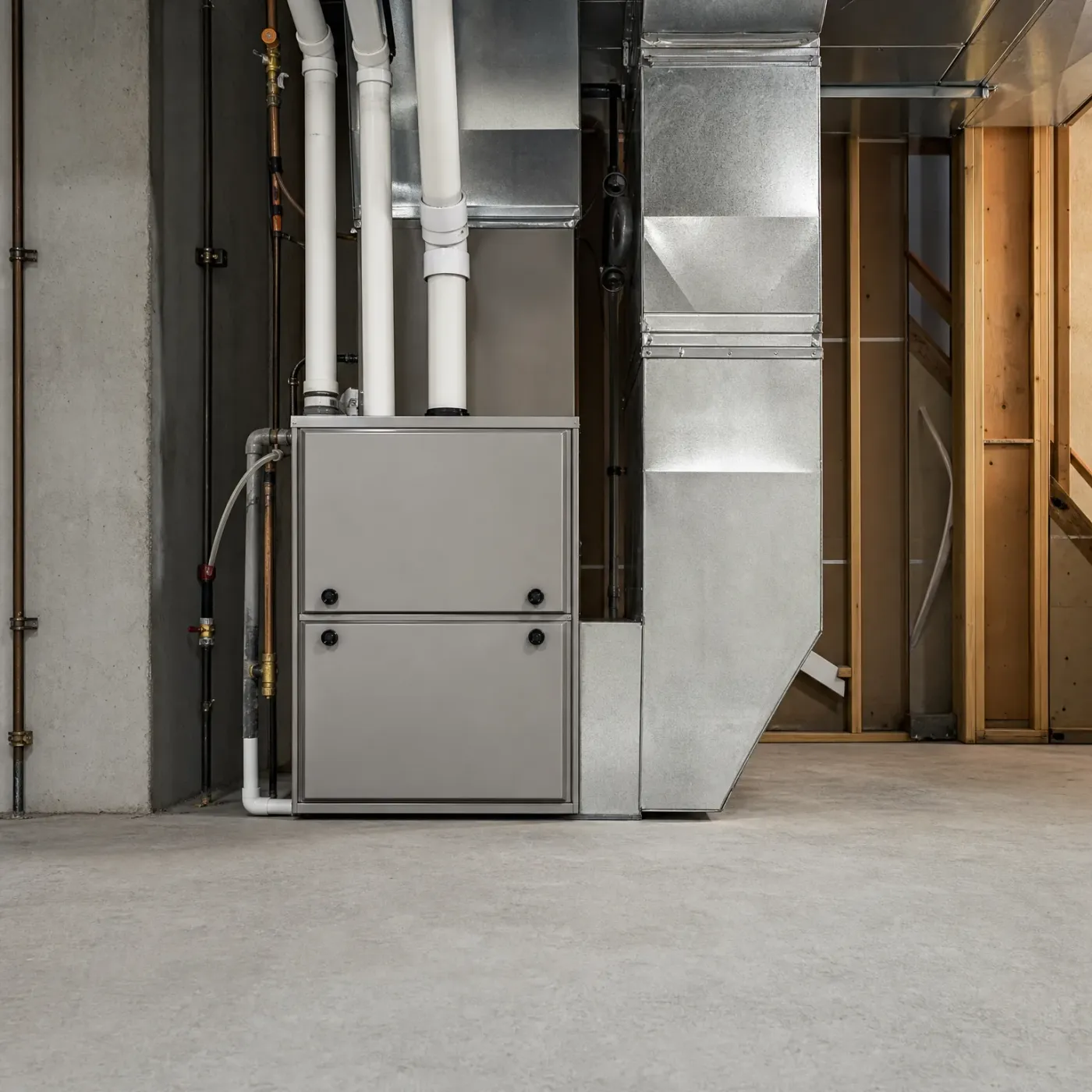
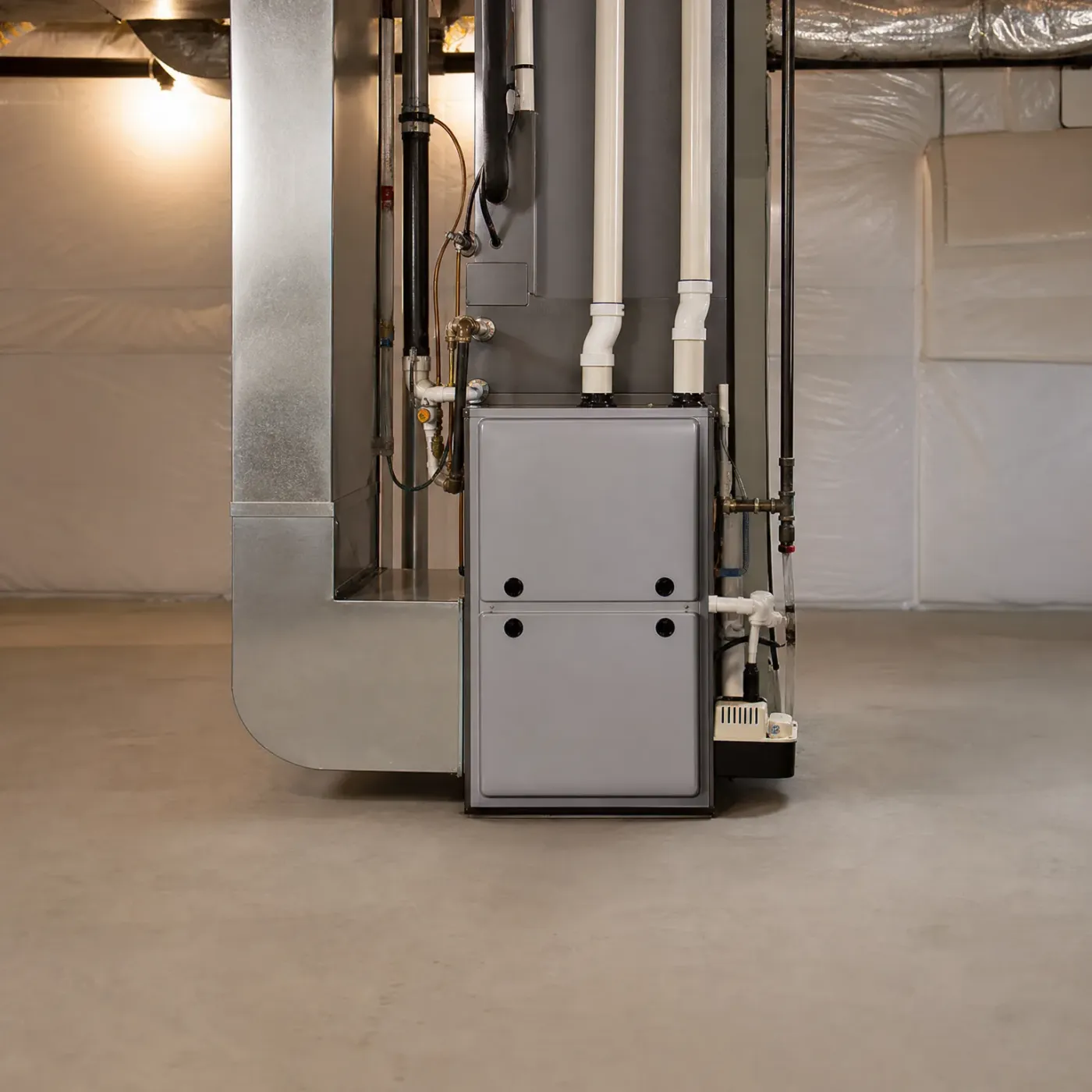
A gray high-efficiency furnace in a basement with white PVC vent pipes, sheet-metal ductwork, copper and black piping, a condensate pump, and insulated walls above a concrete floor.

Smell fading fast

A new heat cycle, a short burning smell, then nothing. That's dust burning off the heat exchanger and it clears within a few minutes. The furnace runs quiet, the air coming out of the vents smells normal, and you don't think about it again until next season.
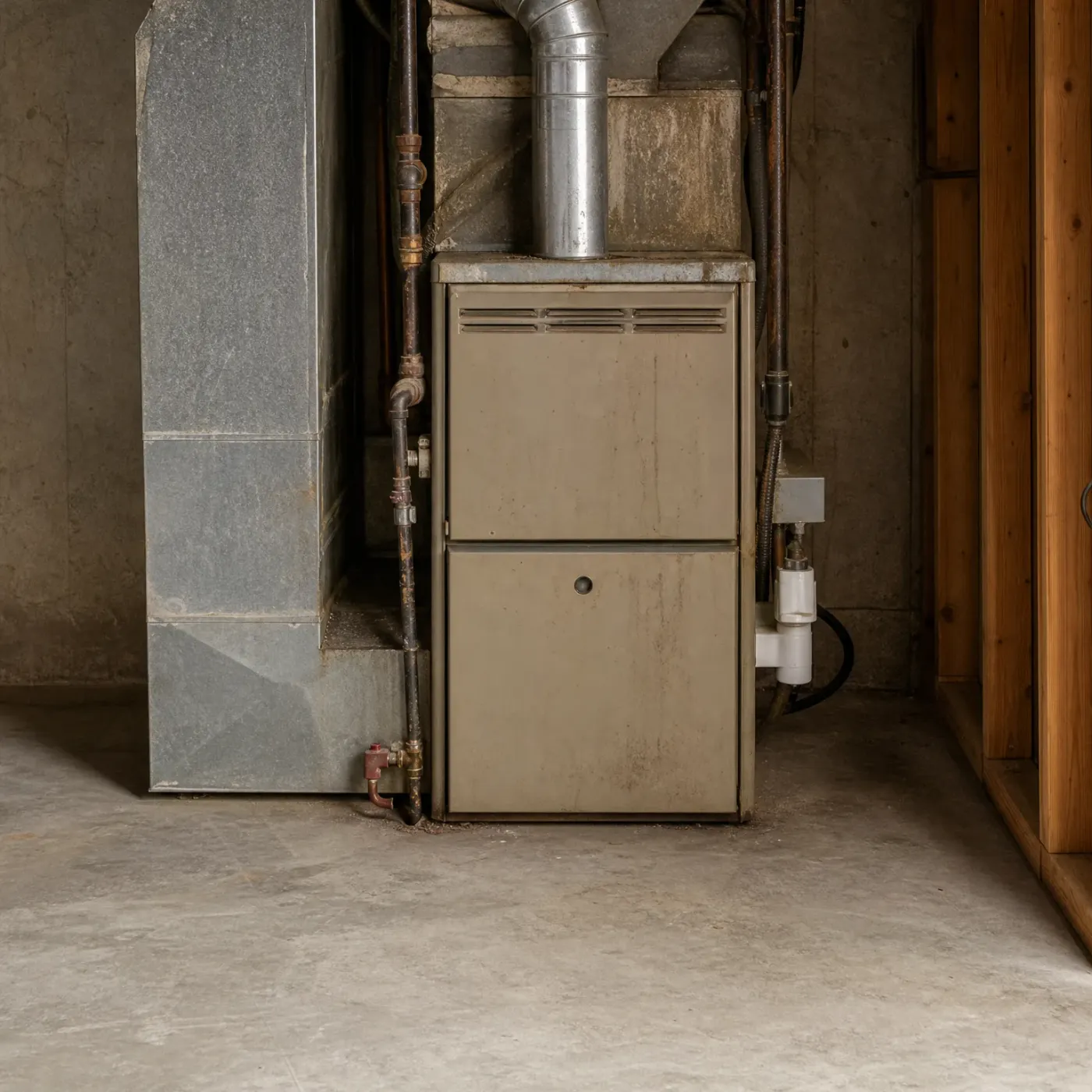

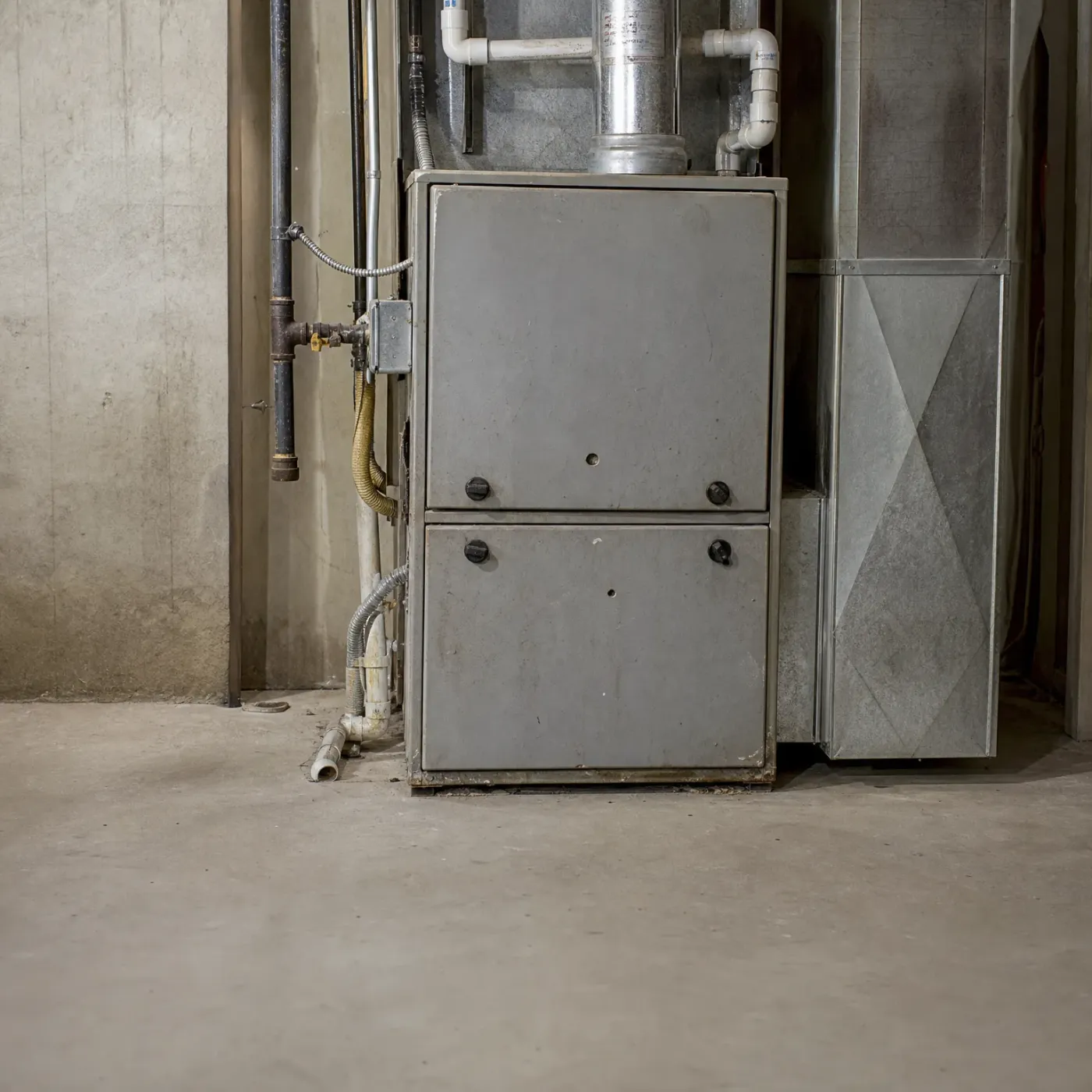
A beige residential furnace stands on a concrete basement floor beside galvanized sheet-metal ductwork, a round flue pipe, copper gas piping, and a PVC condensate line, with a wood-paneled wall at right.

Smell that won't quit

The burning smell is still there after ten or fifteen minutes, or it smells like plastic or hot metal instead of dust. That points to something inside working harder than it should, like a motor or a part rubbing where it shouldn't. Shut it off and get it checked before running it again.

A closed laptop and a cream mug of coffee on a coaster sit on a dark wooden table, with a potted plant at left and a kitchen counter, tiled backsplash and shelf of ceramics in the background.

What that smell means for your house

Most homes here heat with electricity, so a burning smell from the furnace isn't something you can just crack a window and wait out, especially once the cold settles in for the winter. If the smell is coming from a blower motor working too hard, or wiring that's starting to go, that furnace can shut itself off at the worst possible time, usually a night when it's actually cold. A furnace that trips off on you overnight means a cold house by morning and a repair call you didn't plan for.

You don't need to spend an evening calling around West Virginia to find someone who'll look at it, explaining the smell three different times to three different companies and then sitting with quotes trying to guess who's honest. Submit the details once and a licensed local contractor who works on furnaces like yours every winter gets matched to you, the kind who's smelled this before and knows what's usually behind it. One contractor, not a pile of callbacks from companies competing for the job.

A gray upholstered sofa with a textured cushion sits beside a dark round side table holding a vase of green foliage, with a table lamp and sheer-curtained window behind.
A gray high-efficiency furnace stands on a concrete basement floor beside galvanized sheet-metal ductwork, white PVC vent pipes, copper and black piping, and unfinished wood stud framing.

Furnace running clean

This is what a furnace looks like when nothing's wrong. The ductwork above it moves air without resistance, the gas line and condensate pipes are tight, and the burners light and settle without any smell past the first minute or two. No smoke, no odor at the vents, no hot metal smell drifting out of the cabinet.

A gray furnace with two access panels stands on a concrete basement floor beside sheet-metal ductwork, with pipes, flexible conduit and an electrical box on the concrete wall to the left.

Furnace worth a second look

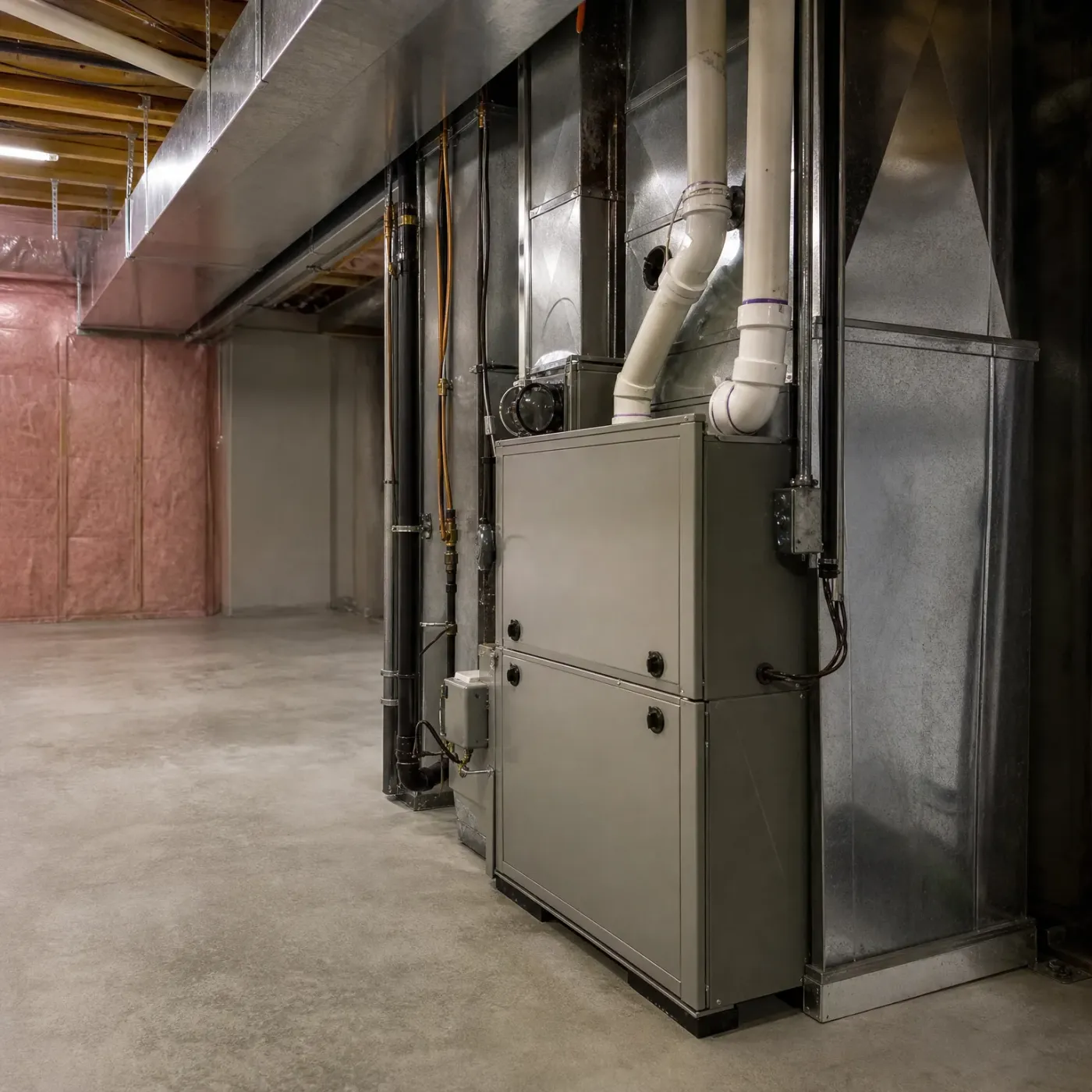
Same setup, same basement, but this one's worth checking closer. If a smell is coming from behind either access panel, or the air handler next to it is pulling warm or burning air into the ducts, a West Virginia contractor who services this equipment all winter can open it up and tell you in minutes whether it's dust or something wired wrong.

A woman with shoulder-length brown hair wearing a beige knit cardigan sits in a gray upholstered armchair near a window, looking off to the side with a slight smile, with bookshelves blurred in the background.
A woman and a sleeping child wrapped together in a cream knitted blanket on a couch, with a potted plant, framed photo and lit lamp in the background.
An unfinished basement with a concrete floor, pink insulation on one wall, exposed joists, galvanized sheet-metal ductwork, PVC vent pipes, and a tall gray furnace with attached gas and electrical lines.

Skip calling around

Only one pro gets your request, so you hear from one company.

Describe your furnace job once, to one pro.

Answer a few questions

It costs nothing to send, and you don't have to hire anyone.

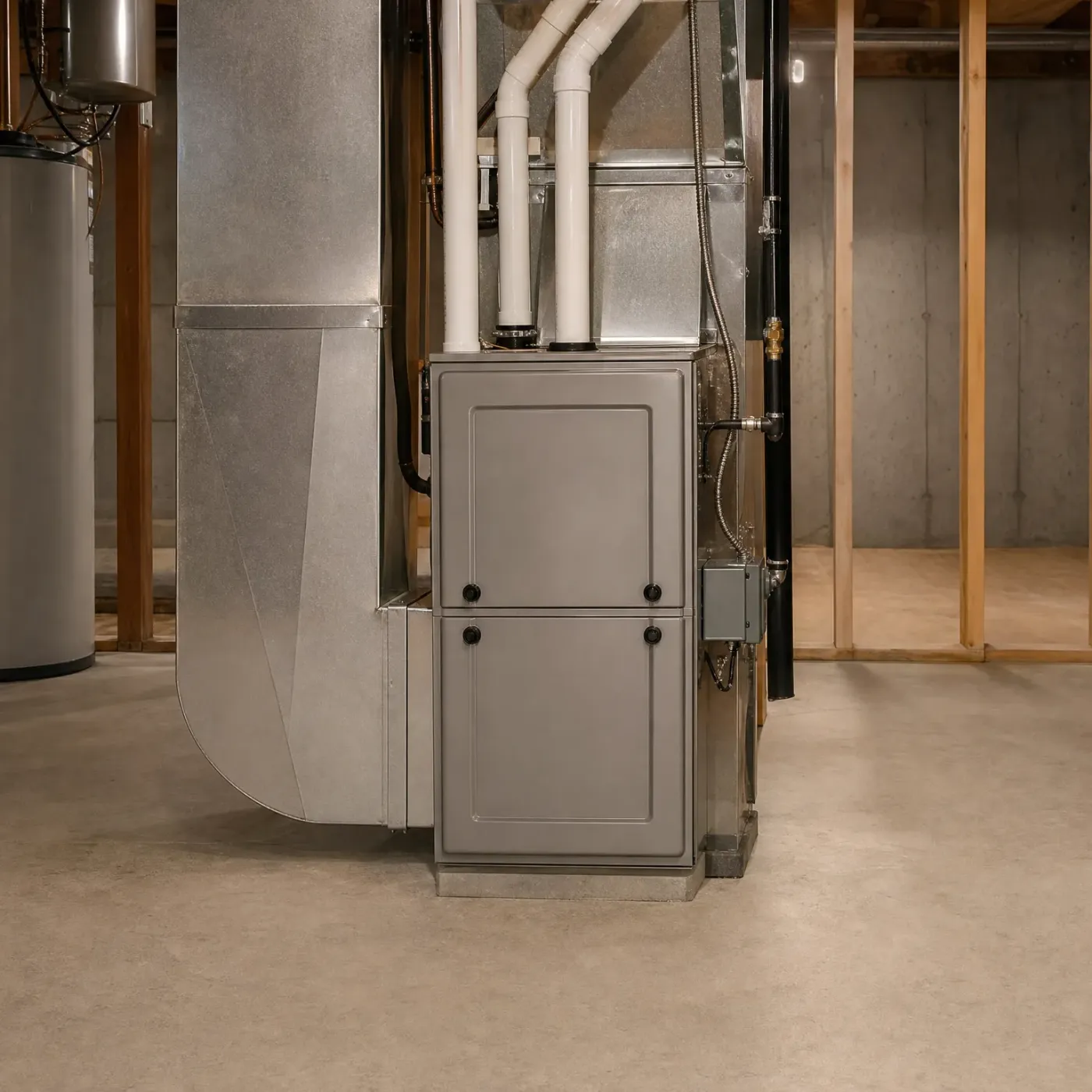
A gray high-efficiency furnace with white PVC vent pipes stands beside sheet-metal ductwork and a water heater in an unfinished basement with concrete walls and wood framing.
A furnace like this one runs clean once the dust burns off, with tight PVC venting and ductwork that shows no sign of rust or strain.
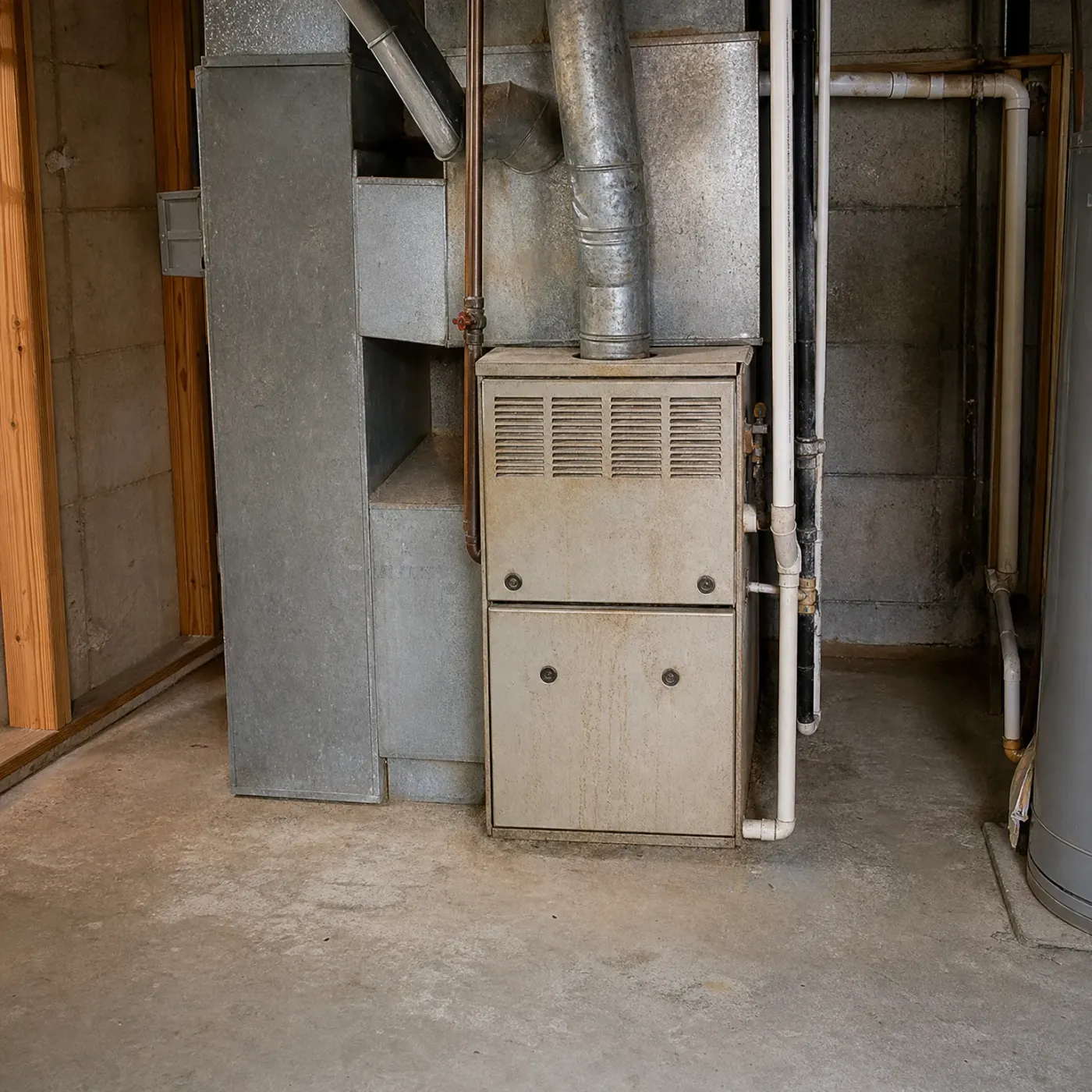
A beige gas furnace with a metal flue pipe stands in a basement against concrete block walls, beside sheet-metal ductwork, copper and white plastic pipes, and a water heater at right.
An older furnace with galvanized ductwork and aging pipe connections is more likely to hold a burning smell that doesn't clear on its own.
  1. Dust on the heat exchanger ignites first when the burners fire.

  2. Burners settle into a steady flame within a minute or two.

  3. Air moving across the exchanger carries that smell through the ducts.

  4. The smell clears from the vents as the dust finishes burning off.

Winter nights average 25°F statewide

On a 25°F night, your furnace isn't cycling on for a few minutes here and there. It's running long, steady stretches to keep up, and that means more hours for a burning smell to show up and more hours for it to be a problem instead of a few minutes of dust.

NOAA nClimDiv 1991-2020 county normals weighted by homes

What to do about that smell

  • A burning smell that clears in a few minutes is dust on the heat exchanger and no reason to call anyone.
  • A smell that lingers, grows stronger, or turns plastic or electrical means the furnace should be shut off until someone looks at it.
  • Galvanized ductwork and older pipe connections hold a burning smell longer than tight PVC venting and newer ductwork.
  • On a cold night your furnace runs long stretches rather than short cycles, which gives a real problem more time to show itself.
  • A local contractor who services furnaces all winter here has seen which parts on your kind of system tend to cause that smell.
  • Booking one contractor means one visit and one diagnosis, not several companies calling to bid on the same job.

A burning smell that fades in a few minutes is dust burning off the heat exchanger. It happens most years the first time the heat kicks on, and it's not a reason to shut anything down. What matters is whether it stays, gets stronger, or starts smelling like plastic or something electrical instead of dust. That's the line between normal and a furnace that needs to be looked at before you run it again. Older ductwork and aging pipe connections hold onto that smell longer than a newer setup, and on a cold night your furnace is running long stretches rather than cycling on and off, so a real problem has more time to show itself than it would on a mild day. If you're past the point of waiting it out, you want someone who works on furnaces like yours all winter here, not someone guessing at what West Virginia weather does to a system that runs this hard for months. A contractor who sees this equipment every season already knows which parts tend to be behind a smell like this and what to check first. Booking through here sends the job to one licensed local contractor, so you're explaining the problem once and waiting on one visit, not fielding calls from several companies trying to win the same job.

Kitchen corner with cream upper cabinets, oak lower cabinets, white marble-look countertop, beige tile backsplash, a ceramic vase of greenery, a wooden cutting board and bowl, and a black-framed window at right.
Interior corner of a room with a white-framed window and wide sill, beige walls with panel molding, a wooden cabinet holding a ceramic vase with a green leafy plant, and blurred shrubs and trees outside.
A wood-framed armchair with beige cushions and a woven lumbar pillow sits in a corner beside a large window overlooking green trees, with a tall ceramic vase holding leafy branches on the left and plaster walls and wood flooring.
Interior corner with a white-framed window above a sill, beige walls with baseboard molding, a greige shaker-style cabinet with brass knobs and a potted plant on top, light wood flooring and a woven jute rug.
A dark-framed six-pane window with white trim and sill set in gray horizontal lap siding, with hydrangea shrubs below and a white column and shingled roof section at left.

Describe it once

Your request stays with one local pro.

Describe it once

No charge to send it. You decide if you hire them.