Why your furnace won't turn on in a West Virginia winter
Tell a local repair pro what your furnace is doing.
Cold hits West Virginia hard, and a furnace that won't fire on a January morning is not something to sit with for long. Most homes here heat with electricity, so when the system stays quiet, the thermostat clicks and nothing answers, or the blower runs but no heat comes out, you need someone who can look at it today, not next week.
There are a few reasons a furnace goes dead in weather like this. A tripped breaker, a bad igniter, a flame sensor that needs cleaning, a thermostat that lost its settings. Some of these a homeowner can check. Most need a licensed hand on the actual part before the house warms back up.
Finding that hand is usually the slow part. Searching for furnace repair in your area, calling two or three contractors, explaining the same problem each time, waiting to hear back, then weighing quotes against each other while the house keeps losing heat. That process can eat a whole day you don't have when it's fifteen degrees outside.
This page skips that. Tell it what your furnace is doing, or not doing, and it matches you with a contractor who works on furnaces like yours in your part of West Virginia. That contractor contacts you directly. No calling around, no repeating yourself to a third or fourth company, no stack of quotes to sort through on your own.
What happens once that contractor looks at your system is between you and them. What this page does is get you to that point faster, with someone suited to the job instead of whoever picks up first. The button below starts that.
A furnace that won't turn on usually comes down to one of a few things. If the thermostat is set to heat and the breaker is fine, the problem is likely the igniter, the flame sensor, or a safety switch that shut the system down on purpose. Electric furnaces are common across West Virginia, and most of them run on heating elements and a sequencer that brings those elements on one at a time. If one element fails or the sequencer sticks, the blower may run but the air stays cold, or nothing happens at all. A clogged filter can also starve the system of airflow until a safety switch trips to keep it from overheating. None of these are things to wait out. With winter mornings running cold, a furnace that won't fire needs a look before the house loses too much heat to catch back up.
A furnace is built to stop itself before it causes damage, and that's most of what's going on when yours won't start. A limit switch watches the heat exchanger, and if it runs too hot, the switch cuts gas or power on purpose. Electric furnaces bring their heating elements on in sequence, one after another, through a part called a sequencer. If that sequencer fails, the elements after it never get their turn, even though the blower starts. That blower can keep spinning after a shutdown, so you'll feel air moving through the vents with no heat in it, which reads as a different problem than it is. A flame sensor covered in residue will tell the system the pilot is out when it isn't, and the gas valve closes within seconds. If your furnace fires, runs a few minutes, then quits, over and over, that's usually a safety switch doing its job repeatedly rather than the unit failing outright. Even the door panel matters. It has to sit fully against an interlock switch, and a panel that's loose or sitting wrong will keep the furnace from starting at all.
What's Actually Happening Inside
A limit switch trips when the heat exchanger runs too hot and shuts off the gas or power before anything cracks or melts.
Electric furnaces step their heating elements on one at a time, so a single bad sequencer can stop the rest from ever kicking in.
The blower often keeps running after a safety shutdown, which is why warm air can stop while the fan still moves cold air through the vents.
A flame sensor coated in residue reads the pilot as out even when it's lit, and the system cuts the gas valve within seconds.
Furnaces that cycle on and off every few minutes before quitting are usually tripping a safety switch rather than failing outright.
Door panels have to seat against an interlock switch, so a panel that's loose or off will keep the whole furnace from starting.
A pro who works on furnaces
Describe your furnace job once, to one pro.
Describe your furnace job, and a local pro who handles it gets in touch.
What are you noticing with your own furnace right now
Walk through what's actually happening at your thermostat. You bump the setting up and wait, and the house stays the same temperature, or the blower kicks on but the air coming out is cool instead of warm. Maybe you hear a click or two from the furnace closet and then silence, no whoosh of air, no hum of elements heating up. Some furnaces will short cycle, turning on for a minute and shutting off again and again. If this has been going on for more than a day in a West Virginia winter, the house is losing ground. Pipes in outer rooms or a basement can get cold enough to worry about, and anyone in the home sensitive to cold is going without heat they need.
You're down in the basement around six, after dark already, and the air down there has gone cold enough that you notice it on the stairs. The furnace sits quiet. No hum, no click, nothing. You can see a thin film of dust hanging in the beam of the work light, stirred up when you nudged the access panel to look at the burners. Upstairs the thermostat is still set where you left it this morning. You crouch by the cabinet and listen for the igniter to glow or the gas valve to click open. Nothing happens. The house is holding yesterday's heat for now, but it won't for long, not in November, not with the ground already cold outside.
Why does my electric furnace just click and not start up?
You hear the thermostat call for heat, then a click from the furnace, and that's it. No blower, no warmth, just quiet after that one click. It happens once, or it happens over and over every few minutes, and either way you're standing there in a cold house trying to figure out if this is something you can wait out until morning or something that's going to leave you without heat all night.
That click is the sequencer or relay trying to start the first heating element, and failing
An electric furnace brings its heating elements on one at a time, not all at once, and a sequencer or relay controls that order. The click you hear is that part trying to close and send power to the first element. If the element doesn't respond, or if a high limit switch senses the heat exchanger area isn't right, the sequencer opens back up and you get silence instead of a blower. A furnace that clicks over and over without ever running is usually telling you one element or relay in that chain has failed, not the whole system. With West Virginia winters running on electric heat in most homes, a furnace stuck on that first click won't warm the house at all.
Winter nights across West Virginia average 25°F, according to NOAA climate data. That's cold enough that a furnace isn't cycling on and off a few times a night, it's running long stretches just to hold the house steady. A weak igniter or a failing sequencer that might limp along in milder weather has no room to hide at that temperature. You'll notice the furnace running longer than it used to, or warm air that feels thinner than it should, before it stops responding to the thermostat at all.
NOAA nClimDiv 1991-2020 county normals weighted by homes
Before you get your furnace repairAfter you get your furnace repair
1
Thermostat calls for heat and sends power to the control board.
2
Control board checks that the limit switch and door switch are closed.
3
Inducer motor starts and proves draft before anything else fires.
4
Hot surface igniter heats up or the pilot flame is sensed.
Winter nights average 25°F statewide
At 25°F, your furnace isn't just kicking on for a few minutes here and there. It's running long stretches to keep the house at temperature, which puts more hours on an igniter or sequencer that's already starting to fail.
NOAA nClimDiv 1991-2020 county normals weighted by homes
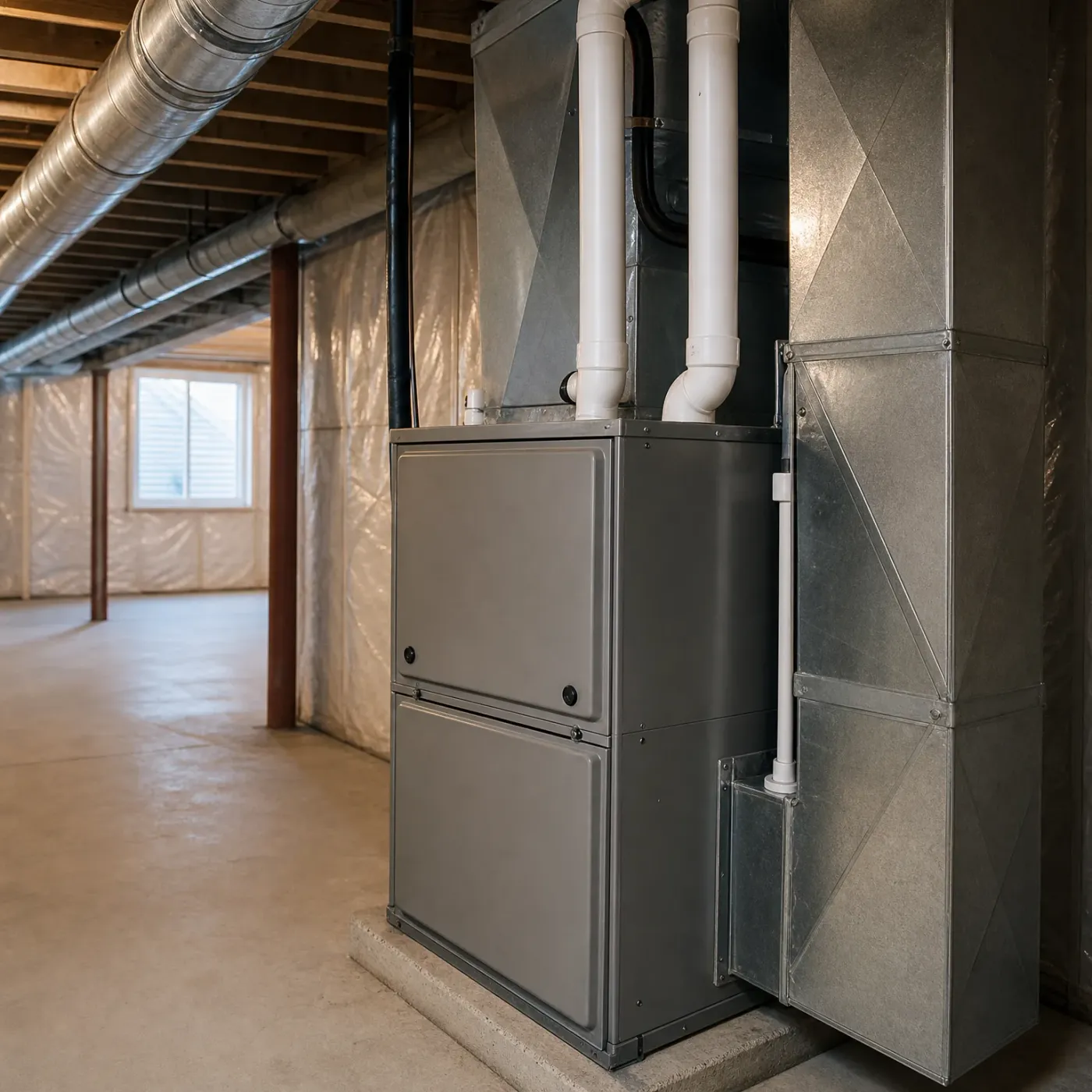
Running the way it should
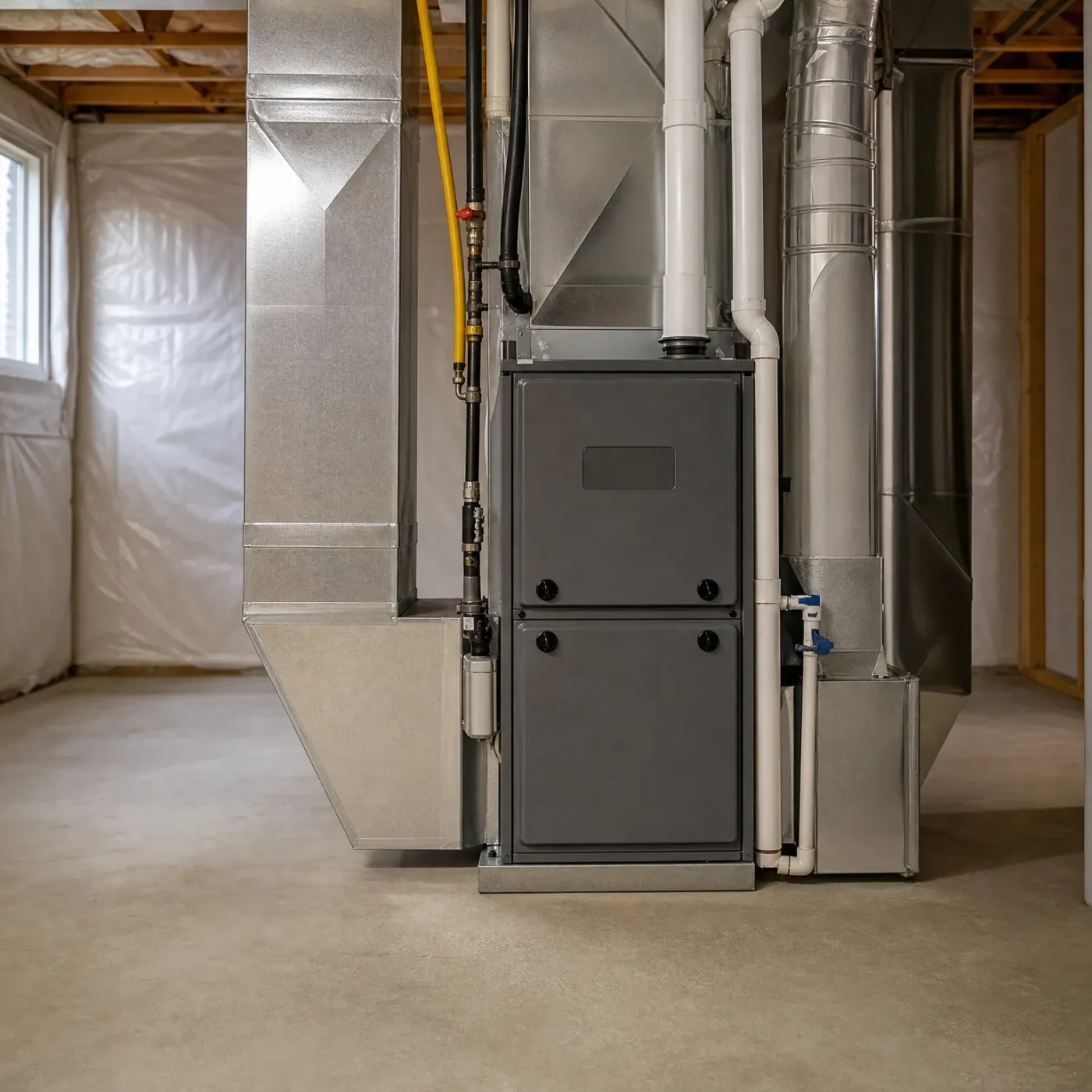
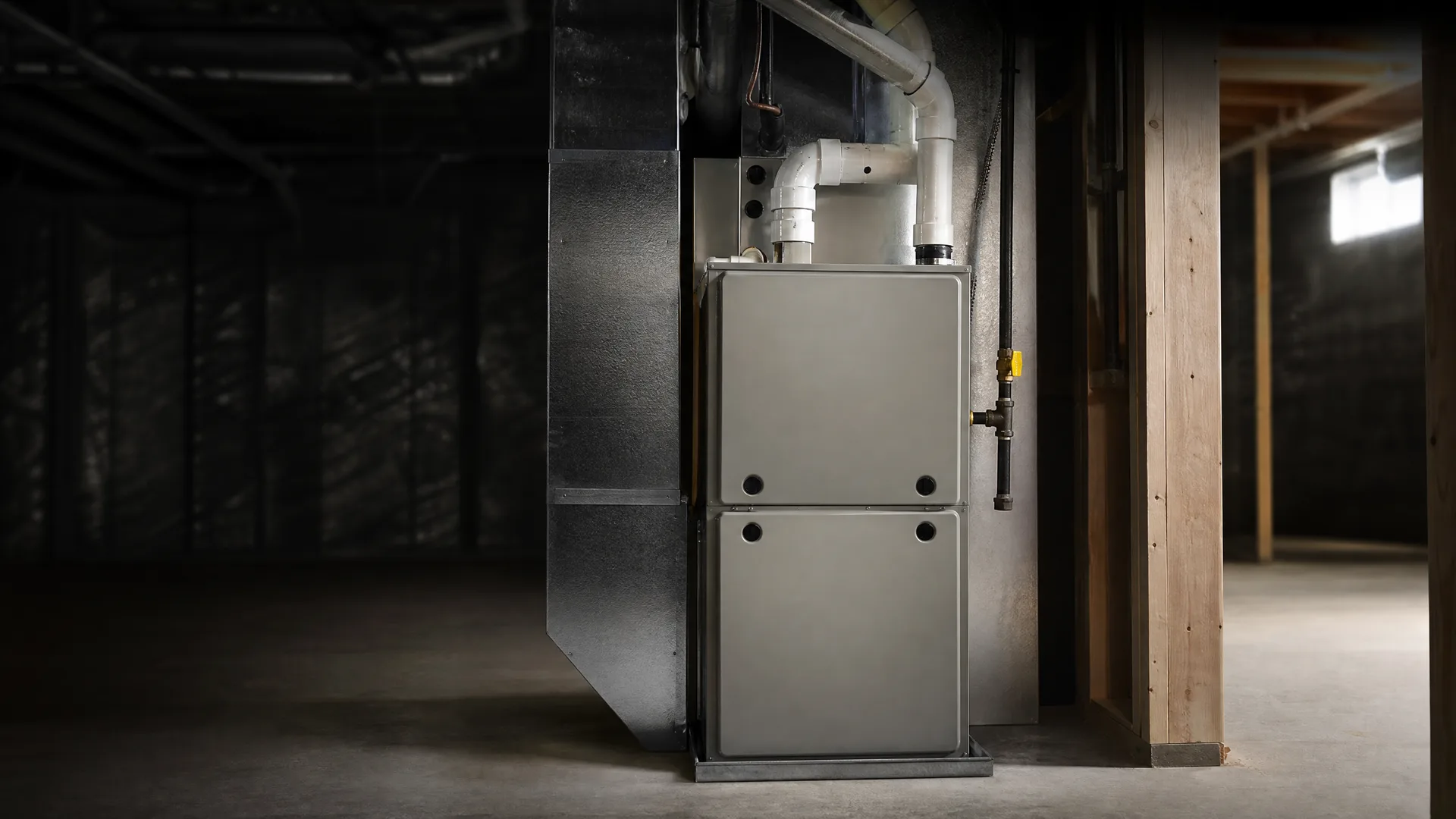
This is a furnace holding its own on a cold night. The inducer draws, the igniter lights, and the blower pushes warm air into that ductwork without a hitch. No burnt dust smell, no short cycling, just steady heat while it's 25°F outside.
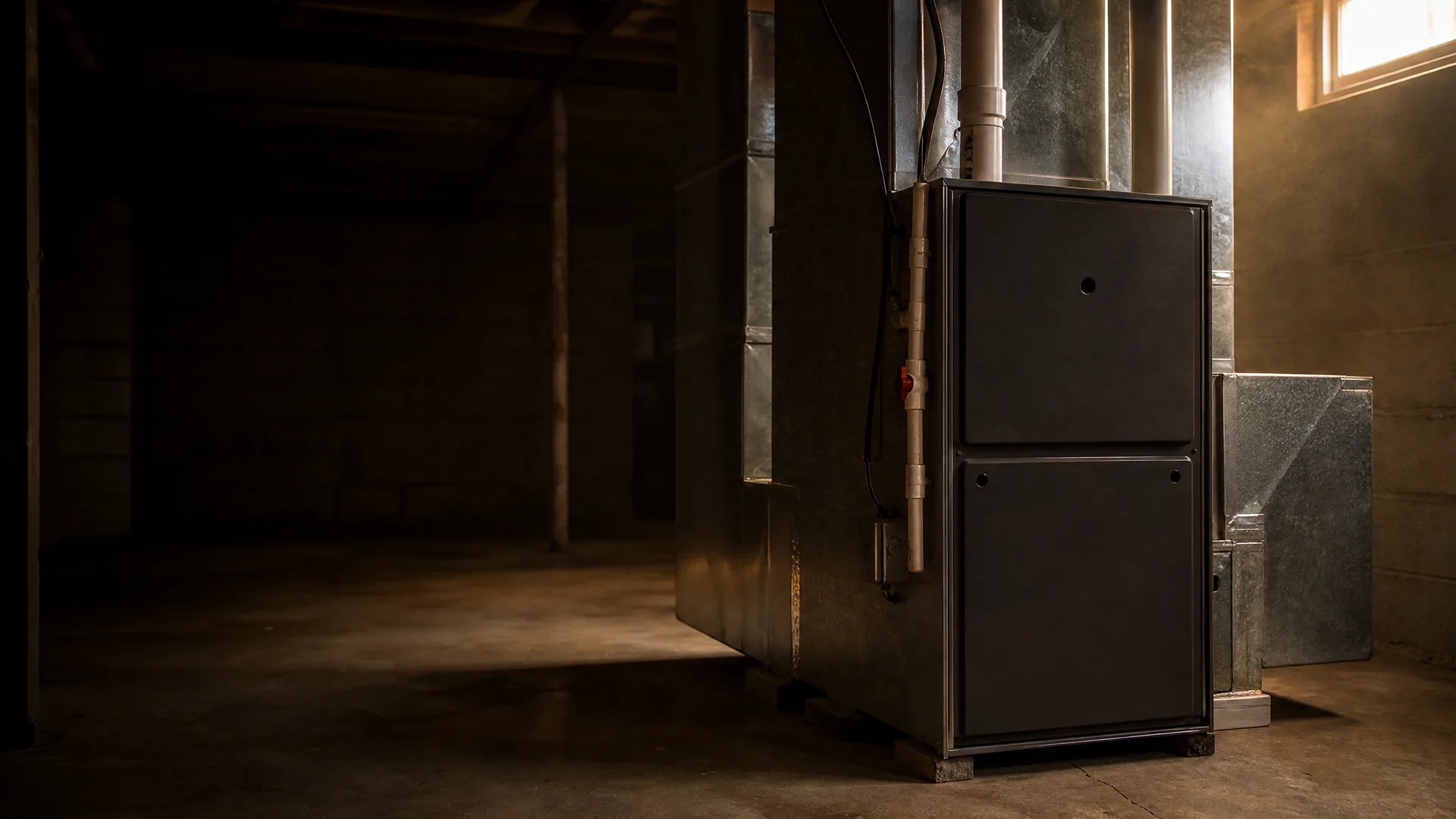
Headed for trouble
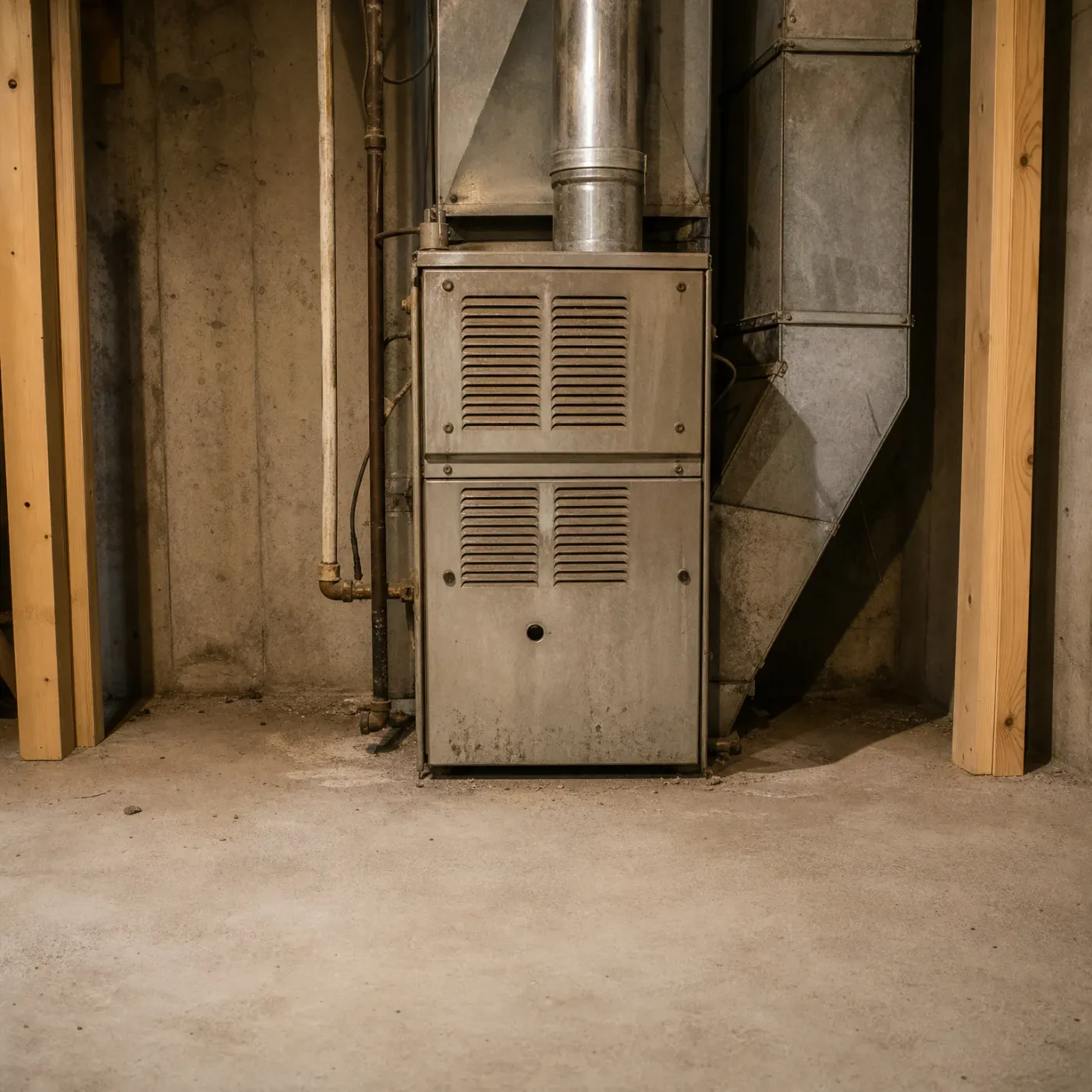
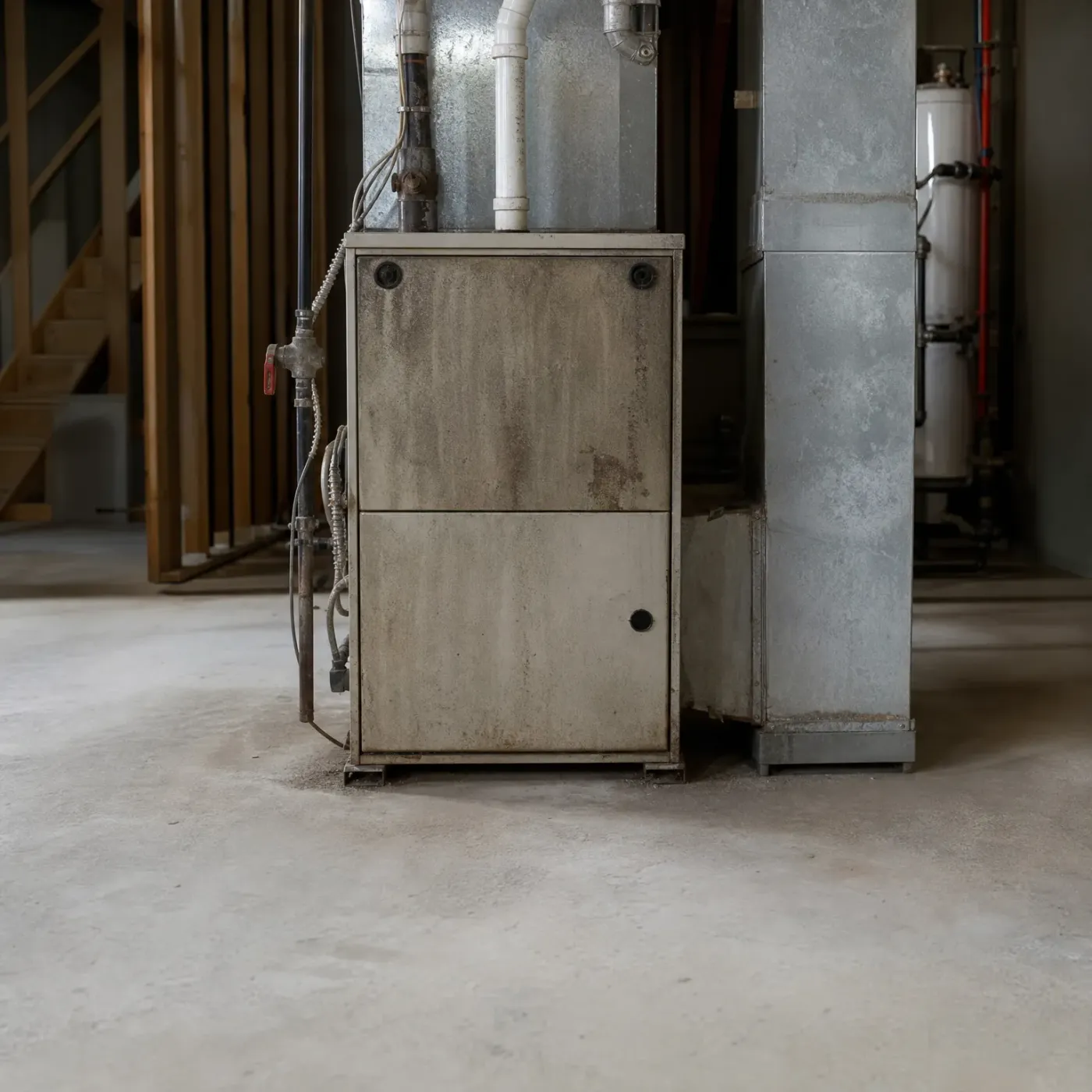
Dust like this builds up over seasons of running without a cleaning. It coats the burners and the flame sensor, and enough of it can cause the kind of misfire or lockout that leaves you standing in a cold basement wondering why nothing's answering the thermostat.
So that's what's keeping your furnace quiet
A furnace that won't start is almost always one part standing in the way: a tripped limit switch, a bad sequencer, an igniter that heats up but can't hold. None of it is a mystery once someone's hands are actually on the unit. What matters now is finding out which one it is before the next cold night at 25°F asks more of your system than it can give.
That's the part you don't have to carry yourself. Instead of calling around to find someone licensed, free in the next day or two, and willing to look at an electric furnace specifically, you answer a few questions about what you're seeing at the thermostat and a contractor who covers your area gets in touch with you directly. No sorting through quotes, no explaining the click and the cold air twice to two different people.