Tell us about the job
Takes about a minute. No obligation.
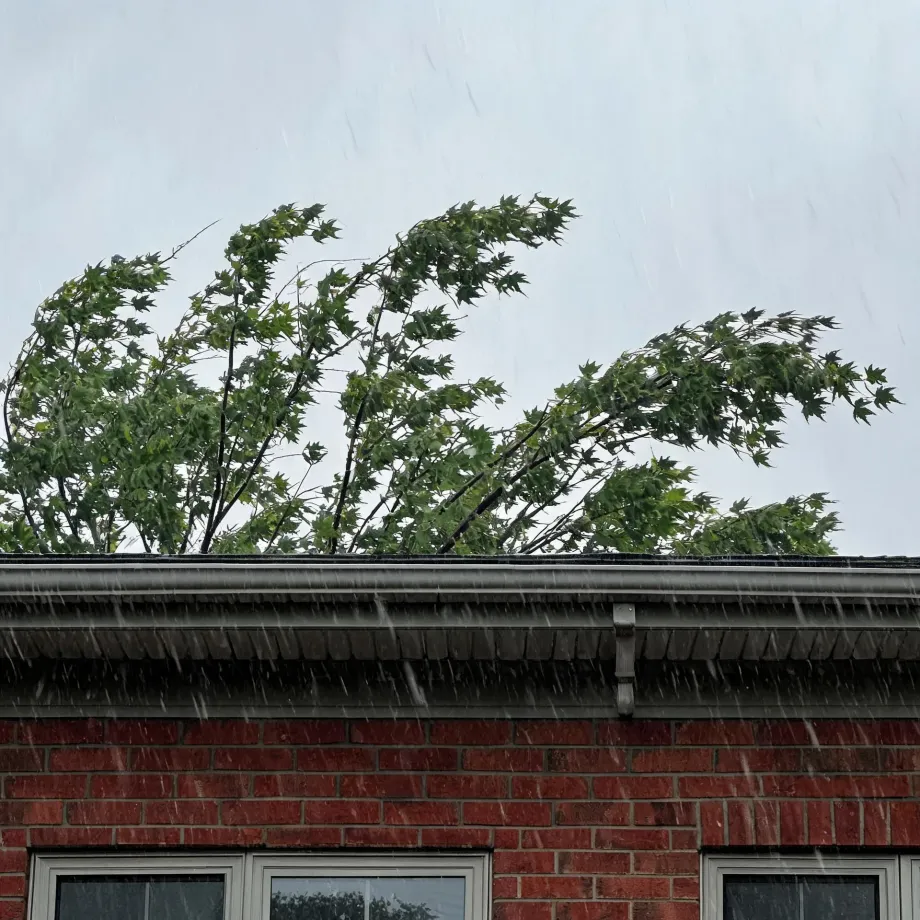
Sizing a furnace for a Wayne County home starts with what the climate here demands of the equipment, and the demand is real. 100 severe weather events were recorded in Wayne County, West Virginia between 2015 and 2024. A contractor quoting an installation has to account for a heating system that will run against that kind of sustained weather load over its life. Get the sizing wrong and the furnace cycles harder than it was built to, shortening the heat exchanger's service life and driving up operating costs before the first winter is out. That is why a contractor treats the load calculation as a local question rather than pulling a number from a manufacturer chart.
Ductwork sized and routed for older equipment does not automatically carry a modern furnace. Half the homes in Wayne County, West Virginia were built in 1976 or earlier (2020-2024 ACS 5-year). A contractor pricing a furnace installation here has to trace what the existing duct system was built to move, check where it narrows or branches, and decide whether it delivers enough airflow for the new unit's output. The electrical service gets the same look. What the house already contains sets the scope of the job before anyone selects a box.
What Gets Installed With a New Furnace
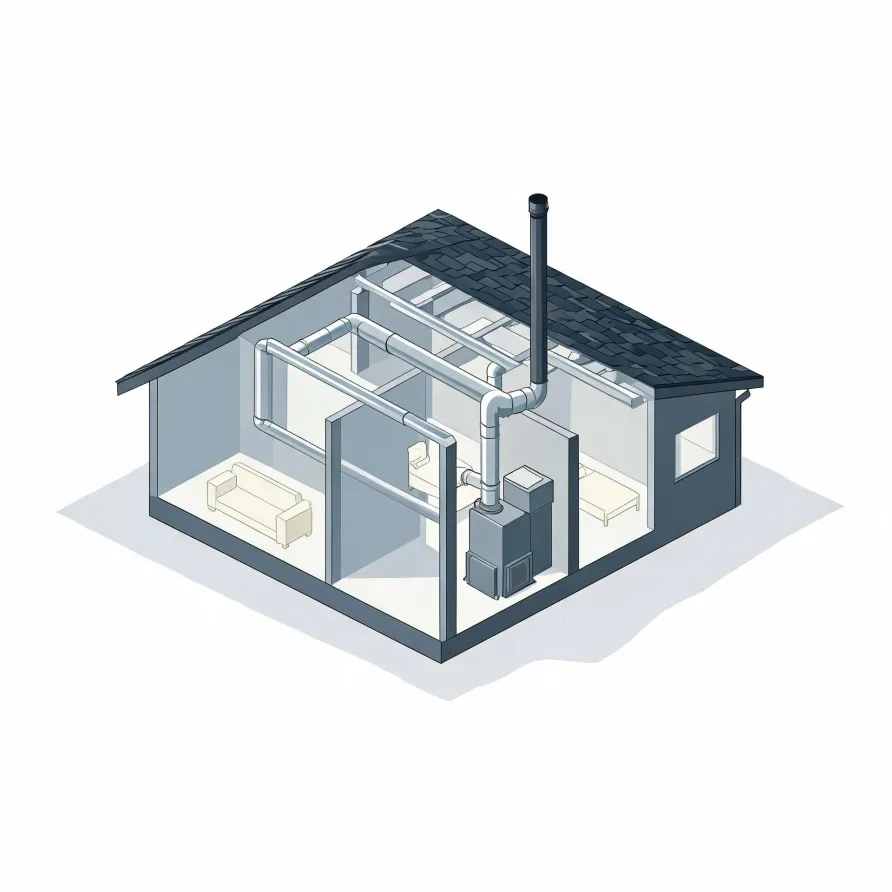
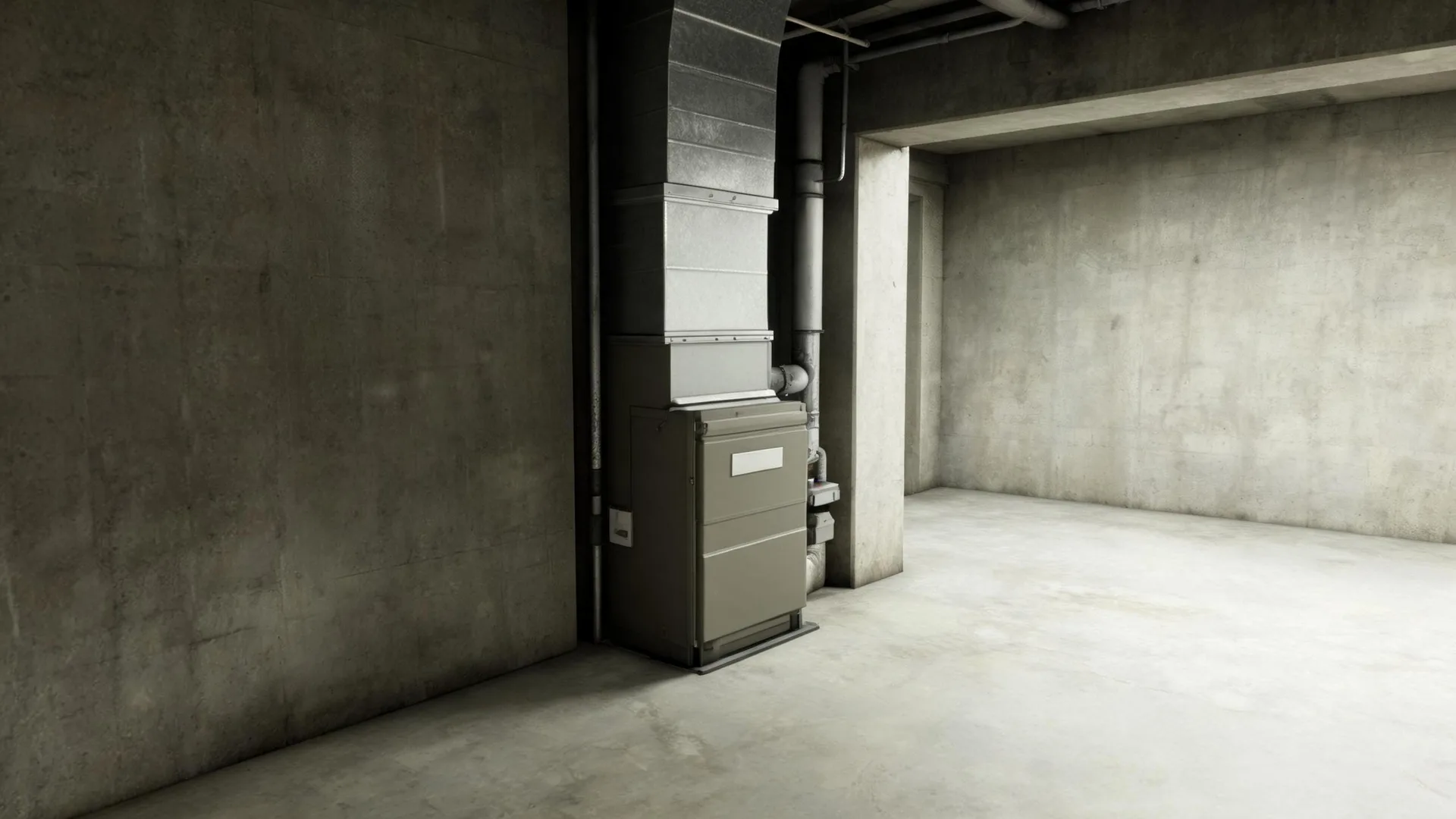
The furnace itself sits in a utility space, usually a basement, crawlspace, or dedicated mechanical closet, and it is the unit that generates heat for the house. A burner assembly inside it combusts fuel, and a heat exchanger transfers that warmth to the air moving through. The blower motor then pushes that conditioned air out into the living space.
A flue pipe runs from the furnace to an exterior vent, carrying combustion gases safely out of the home. Alongside the furnace, a contractor installs the thermostat on an interior wall, which is the control point the homeowner uses to set temperatures, and a filter housing at the air intake to keep debris from moving through the system.
The drawing shows a typical layout, and a licensed contractor determines exactly what applies to your house and its existing setup.
Find a contractor in Wayne CountyWayne County, WV, by the numbers
100 severe weather events were recorded in Wayne County, West Virginia between 2015 and 2024.
NOAA National Centers for Environmental Information, Storm Events Database, bulk CSV export, events 2015-01-01 through 2024-12-31.Half the homes in Wayne County, West Virginia were built in 1976 or earlier (2020-2024 ACS 5-year).
U.S. Census Bureau, 2020-2024 American Community Survey 5-Year EstimatesWayne County, West Virginia holds 18,263 housing units (2020-2024 ACS 5-year).
U.S. Census Bureau, 2020-2024 American Community Survey 5-Year EstimatesOwners occupy 78.6% of the occupied homes in Wayne County, West Virginia (2020-2024 ACS 5-year).
U.S. Census Bureau, 2020-2024 American Community Survey 5-Year EstimatesCodes & Standards Behind Furnace Work in Wayne County, West Virginia5 sourced rules and standards
What the installation looks like in Wayne County
Non-weatherized gas furnaces manufactured on or after November 19, 2015 must reach 80.0 percent AFUE.
Non-weatherized oil-fired furnaces manufactured on or after November 19, 2015 must reach 83.0 percent AFUE.
Mobile home gas furnaces manufactured on or after November 19, 2015 must reach 80.0 percent AFUE.
Non-weatherized gas furnaces manufactured on or after December 18, 2028 must reach 95.0 percent AFUE, up from the 80.0 percent minimum that applies to units manufactured before that date.
Licensing Rules for Contractors in Wayne County, West Virginia
West Virginia requires a licence from the Commissioner of Labor to perform, or offer to perform, work on a heating, ventilating and cooling system.
Severe Weather Events in Wayne County
Weather puts real hours on heating equipment. How hard a furnace works over its life depends in large part on what the climate around it demands, and that makes local storm history a useful piece of context for any installation decision in Wayne County.
100 severe weather events, 2015–2024. Source: NOAA National Centers for Environmental Information, Storm Events Database.